The short answer
Flower pollen extract is rye pollen, and it has the best randomized record of any prostate botanical. Across four trials in 444 men, pooled results showed men were roughly twice as likely to rate their urinary symptoms as improved, and nocturia improved too. Urine flow did not.
Before you read on
Some links on this page are affiliate links, including the ones to FlowForce Max. If you buy through one, I earn a commission at no extra cost to you. It never changes what I write here, including the parts that aren't flattering.
You probably met this ingredient on the back of a bottle. "Graminex flower pollen extract", usually listed first, usually with no explanation of what pollen has to do with urinating at three in the morning.
It turns out to have the strongest trial record on the herbal prostate shelf. It also has the smallest, and the gap between those two facts is the whole story of this page.
Everything below comes from the published trials themselves, not from supplement marketing. Where a number is missing from the research, I say so instead of filling the hole.
What is flower pollen extract, and why is it in prostate supplements?
It is an extract of rye pollen. The scientific name on the research is Secale cereale, rye grass, and the extract is made from the pollen rather than the grain, the berry or the bark that other prostate botanicals come from.
That makes it an odd one out. Saw palmetto is a berry, pygeum is bark, beta-sitosterol is a plant sterol found across the plant kingdom. Pollen is the plant's male reproductive dust, collected in bulk and then separated into a water-soluble fraction and an oil-soluble fraction.
The reason it ended up in urology is a Swedish product called Cernilton, made from rye-grass pollen and tested in men with enlarged prostates from the 1960s onward. Cochrane's 2000 review describes it exactly that way: "prepared from the rye-grass pollen Secale cereale".
Memorial Sloan Kettering's herb database has an entry on pollen extract that covers a standardized Swedish pollen-and-pistil preparation, listing rye grass among its sources. Its honest summary of the mechanism: unclear, with no estrogenic activity found in preclinical work.

Is Graminex the same thing as Cernilton?
They are both rye flower pollen. I could not confirm that they are the same material, and I am not going to pretend otherwise on a page men may buy from.
Here is what each side says. Cernilton is the Swedish preparation that carries almost all of the prostate research, including the trials summarized further down this page. Graminex, on its own company page, describes itself as the grower and manufacturer of solvent-free Flower Pollen Extracts, planted from non-GMO rye seed on family farmland and processed in Deshler, Ohio.
Graminex does not mention Cernilton anywhere on that page, and the published prostate trials do not mention Graminex. Same plant, same part of the plant, two different companies and two different extraction methods.
One public record does connect them. In a 2020 federal court opinion (A.B. Cernelle v. Graminex, Eastern District of Michigan), the judge wrote that Graminex was at one time a source of raw, threshed flower pollen for Cernelle, the Swedish company behind Cernilton, and distributed Cernelle's products in the United States.
The same opinion records Graminex's own position: its owners testified that their flower pollen tablets were a different formulation from Cernilton. The court also ordered Graminex to remove Cernilton trial studies from its website. So the fair summary is shared roots and a shared raw material, not a proven match with the extract the trials tested.
Graminex-branded material does show up in newer research, which is worth knowing. A 2025 Romanian study of 207 men with chronic pelvic pain used a standardized pollen extract product whose conflict-of-interest statement names Graminex flower pollen extract plus B vitamins as its contents.
So the honest position is this: when a label says Graminex, you are buying rye flower pollen extract from a named American manufacturer, in the same family as the material the classic trials used. You are not buying the exact preparation those trials tested.
What did the enlarged-prostate trials actually find?
Four trials, 444 men, 12 to 24 weeks. Those numbers come from two 2000 reviews by the same Minneapolis team, published as a Cochrane review and as a systematic review in BJU International.
Two of the four compared the pollen extract with placebo. Two compared it with something else: Tadenan, which is a pygeum product, and Paraprost, an amino-acid mixture. Three used a double-blind method, though the reviewers noted that treatment concealment was unclear in every one.
How much more likely men on rye pollen extract were to report satisfactory or improving urinary symptoms, compared with placebo (risk ratio 2.40, 95% CI 1.21 to 4.75), across four trials and 444 men. Source: MacDonald et al., BJU International (2000)
The table below puts those results beside saw palmetto, the ingredient most men compare it with. Read the bottom two rows together: one column has a small, encouraging body of evidence, the other has a large, discouraging one.
| What was measured | Flower pollen extract (Cernilton) | Saw palmetto |
|---|---|---|
| Trials pooled | 4 trials, 444 men | 27 trials, 4,656 men |
| How long they ran | 12 to 24 weeks | Weeks to more than a year |
| Men reporting improvement | 2.4× as likely as on placebo (RR 2.40, CI 1.21 to 4.75) | Little to no difference from placebo |
| Nighttime trips | Improved vs placebo (RR 2.05, CI 1.41 to 3.00) | No meaningful difference |
| Peak urine flow | No improvement vs placebo | No meaningful difference |
| Leftover urine and prostate size | No improvement vs placebo | Not shown to improve |
| Side effects | Rare and mild; 4.8% withdrew vs 2.7% on placebo | Similar to placebo |
| State of the evidence | Small and short; the Cochrane review was withdrawn in 2011 as out of date | Large and consistent; high certainty that it does little |
Those saw palmetto figures come from the 2023 Cochrane review, which pooled 27 studies and 4,656 men, and from the NCCIH summary of the evidence, which says plainly that the Cochrane review found no benefit over placebo. The full story is in our guide to saw palmetto, beta-sitosterol and pygeum.
One more fact belongs in that table and does not fit a cell. Cochrane withdrew the pollen review in 2011, marking it out of date. The numbers were not found to be wrong. Nobody has brought them up to date, which is a different problem and in some ways a worse one.
What the individual trials looked like
Pooled numbers hide the texture, so here are two of the originals.
A Cardiff team ran a six-month double-blind trial in 60 men with outflow obstruction. Subjective improvement reached 69% on the pollen extract against 30% on placebo. Residual urine dropped and so did the front-to-back diameter of the prostate on ultrasound, while flow rate and voided volume showed no significant difference.
A Warsaw urologist followed 89 men for four months, 51 on the pollen extract and 38 on a pygeum product as controls. Subjective improvement was 78% against 55%. This one did report better flow and less residual urine, which puts it at odds with the pooled result.
Notice the shape of both. Sixty men. Eighty-nine men. Compare that with the 3,047 men followed for a mean of four and a half years in the trial that settled how prescription combination therapy works, and you see why the certainty rating for pollen extract is low.
The supplement built on this ingredient
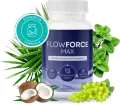
FlowForce Max leads with Graminex flower pollen extract and saw palmetto, supported by grape seed extract, ViNitrox, muira puama, monolaurin, fisetin, luteolin and a group of antioxidant herbs. Fifteen ingredients, one chewable tablet a day.
Read the full FlowForce Max review →
If you buy through this link I receive a commission at no additional cost to you.
Does it help with waking up at night?
This is the one place where pollen extract beats almost everything else in the aisle, and it still deserves a careful reading.
Against placebo, men on the pollen extract were more likely to see their nocturia improve, with a risk ratio of 2.05 and a confidence interval from 1.41 to 3.00. That interval sits entirely above 1, which is what statisticians mean by a real finding rather than a hopeful one.
Against Paraprost, the amino-acid comparator, the difference was 0.40 fewer trips an evening. Less than half a trip. Real, measurable, and probably not what a man imagines when he buys a bottle.
Here is the part that no supplement will tell you. Nighttime urination often has nothing to do with the prostate at all: the kidneys making too much urine overnight is the more common driver, which is why telling nocturia and overactive bladder apart matters before you spend anything. The full picture sits in the main guide to waking up at night to pee after 50.
How is it thought to work?
By calming rather than shrinking. That is the most defensible summary of a mechanism nobody has nailed down.
The strongest clue is in the trial results themselves. Men felt better while their flow rate, residual urine and prostate size mostly stayed put. An ingredient that unblocked the plumbing would move those numbers. An ingredient that reduces irritation in the prostate and bladder neck would do exactly what these trials recorded.
MSK's entry says the exact mechanism is unclear, notes that preclinical studies found no estrogenic activity, and points to antioxidant properties as one possible contributor. That is the state of play, and it is a long way from the diagrams on supplement pages.
Compare it with how beta-sitosterol and saw palmetto are supposed to work and the contrast is instructive: those two have tidy hormonal stories and disappointing trial results. Pollen extract has a messy story and better results.
What about prostatitis and pelvic pain?
This is the strongest single trial the ingredient has, and it is not about an enlarged prostate.
Chronic prostatitis and chronic pelvic pain syndrome, which NIDDK describes as pain in the pelvis with urinary symptoms, has no standard drug treatment. German researchers tested the pollen extract against placebo in 139 men over 12 weeks, published in European Urology in 2009.
Pain scores improved significantly, as did quality of life and the total symptom index. Response, defined as a symptom score falling by at least 25% or 6 points, reached 70.6% on the extract against 50.0% on placebo. Adverse events were described as minor in all patients studied.
That is a well-designed, multicentre, double-blind trial with a clear result. It is also a different condition from the one most men reading this page have. If your problem is a slow stream and three trips a night, the prostatitis evidence is encouraging background, not a promise.
How much did the trials use, and for how long?
Duration is the part you can act on. The enlarged-prostate trials ran 12 to 24 weeks; the Cardiff trial ran a full six months; the prostatitis trial measured its primary result at 12 weeks.
Nothing in that research supports judging a bottle after a fortnight. Three months is the honest minimum, and it is also long enough that writing your night trips down beforehand stops being optional.
Milligram amounts are harder to pin down. The prostatitis trial describes its regimen as two capsules every eight hours for 12 weeks, which is six capsules a day. The abstracts of the older prostate trials do not state a per-capsule amount, and Cochrane's reviewers flagged "unknown quality of the preparations utilized" as one of the limits of the whole body of work.
Which leaves a practical gap. A supplement label that says "flower pollen extract" with no milligrams cannot be compared with any trial, and that is true of most of this category. For an ingredient where the trial doses are published, see the beta-sitosterol dosage guide.

Who should not take it
Most men tolerate this ingredient easily. A few have good reason to leave it on the shelf.
- Anyone with a grass or pollen allergy. Pollen is the source material. A published case report from Verona describes systemic anaphylaxis in a man allergic to grass pollen after he ate an undefined pollen mixture sold as a dietary supplement. That was whole pollen rather than the purified extract, and it is still the reason to ask an allergist first.
- Men who have not been examined yet. A supplement cannot tell you whether a weak stream after 50 is an enlarged prostate or something else. Get the diagnosis, then decide about bottles.
- Men expecting a stronger stream. Flow rate is the one outcome the pooled trials consistently failed to move. If that is your main complaint, this ingredient is a poor match for it.
- Anyone with warning signs. Blood in the urine, fever with urinary pain, or being unable to pass urine at all are not supplement problems. The list is in when to see a urologist.
Possible side effects
In the pooled prostate trials, adverse events were rare and mild. The clearest measure is who quit: 4.8% of men on the pollen extract withdrew, against 2.7% on placebo and 5.2% on the amino-acid comparator.
The 2009 prostatitis trial reported minor adverse events in all patients studied, with no severe side effects. MSK's entry notes that across the few studies conducted, no side effects appeared to be related to pollen extract, and that an in vitro study found no inhibition of the CYP2D6 liver enzyme.
What is missing matters as much. No published trial follows men beyond roughly six months, so anything you read about long-term safety is extrapolation. Stomach upset is the complaint most often reported across this whole category, and it is worth watching for in the first weeks.
Talk to your doctor if…
- You take a prescription for your prostate. Alpha-blockers such as tamsulosin and 5-alpha reductase inhibitors such as finasteride have never been formally tested alongside pollen extract. If you are weighing one up, our page on tamsulosin side effects covers what that drug does and does not do.
- You take a blood thinner. Warfarin, apixaban and the rest deserve a pharmacist's opinion before any new supplement, every time.
- You have surgery scheduled. Tell the surgical team everything you take, including supplements, at the pre-op appointment rather than on the day.
- You cannot empty your bladder. Straining, dribbling that gets worse, or passing only small amounts can point toward urinary retention, which is a same-day problem and not a supplement one.
- Anything changes quickly. Symptoms that worsen over days rather than months deserve a phone call, whatever is in your cupboard.
What is still unknown
Four things, and they are the four I would want a man to hold in his head at the shelf.
Nobody has run a large, long, independent trial. Saw palmetto's reputation survived until exactly that happened, and then it did not. Pollen extract has never been put through the same test, so its good numbers remain untested rather than proven.
Nobody has compared branded preparations head to head. Cernilton carries the research; Graminex carries much of the American market; no published trial pits one against the other.
Nobody knows the right dose for a supplement capsule, because the trials used a specific pharmaceutical preparation on a specific schedule, and most labels disclose neither.
And nobody has measured what happens after a year. My father-in-law took a prostate supplement for months without anyone writing a single number down, which is its own kind of missing data. Three nights counted before you start, three nights counted at week twelve, costs nothing and tells you more than any label.
If you want this ingredient in a single daily tablet
FlowForce Max is built around Graminex flower pollen extract, with saw palmetto alongside it and grape seed extract, ViNitrox, muira puama, monolaurin, fisetin and luteolin behind both. One chewable a day, free US shipping, no subscription, and 60 days to change your mind. $69 for one bottle, $59 each for three, $49 each for six.
See the official FlowForce Max page →
Affiliate link. I earn a commission at no extra cost to you. Per-ingredient amounts are not disclosed, so it cannot be matched to the trial doses. A supplement is not a treatment for an enlarged prostate and is never a substitute for being examined.
Frequently asked questions
Does Graminex flower pollen extract actually work for an enlarged prostate?
The pollen extract studied in the trials did improve how men rated their symptoms. Pooling four trials in 444 men, self-rated improvement was 2.4 times as likely as on placebo, and nighttime urination improved as well. Urine flow, leftover urine and prostate size did not change. The trials were short, and all of them used the Swedish extract Cernilton rather than a branded American one.
Is Graminex the same thing as Cernilton?
Not provably. Both are rye flower pollen extracts. Cernilton is the Swedish preparation used in the prostate trials. A 2020 federal court opinion records that Graminex once supplied raw pollen to Cernilton's maker, and that Graminex calls its own tablets a different formulation. So I do not claim they are the same material.
What are the side effects of flower pollen extract?
Side effects in the pooled prostate trials were rare and mild. Of the men taking the pollen extract, 4.8% dropped out, against 2.7% on placebo. The 12-week prostatitis trial reported only minor adverse events. Nothing published follows men beyond about six months, so longer-term safety is simply unmeasured.
Can I take flower pollen extract if I have hay fever?
Ask an allergist first. Pollen is the source material, and a published case report describes systemic anaphylaxis in a grass-pollen-allergic man who swallowed an undefined pollen mixture sold as a supplement. That case involved whole pollen, not the purified extract used in the prostate trials, but it is the reason every honest page on this ingredient flags the question.
How long does flower pollen extract take to work?
The prostate trials ran 12 to 24 weeks, and one British trial ran six months. The prostatitis trial measured its result at 12 weeks. Nothing in that research supports judging it after a fortnight. Give it the length of a real trial, roughly three months, and write your night trips down before you start.
References
The studies and health-agency pages cited on this page, in the order they first appear.
- Wilt T, Mac Donald R, Ishani A, Rutks I, Stark G. Cernilton for benign prostatic hyperplasia. Cochrane Database Syst Rev. 2000;(2):CD001042. PMID 10796739.
- Memorial Sloan Kettering Cancer Center. Pollen Extract. About Herbs.
- Graminex LLC. About. graminex.com.
- U.S. District Court, Eastern District of Michigan. A.B. Cernelle v. Graminex, L.L.C., No. 03-10291, Opinion and Order (February 4, 2020). uscourts.gov.
- Ivănuță M, Puia D, Cumpănaș AA, Ivănuță AM, Groza V, Pricop C. Clinical Evaluation of a Pollen-Extract-Based Phytotherapy Compared to Conventional Therapies in Chronic Prostatitis and Chronic Pelvic Pain Syndrome. Med Sci (Basel). 2025;13(3). PMID 40981184.
- MacDonald R, Ishani A, Rutks I, Wilt TJ. A systematic review of Cernilton for the treatment of benign prostatic hyperplasia. BJU Int. 2000;85(7):836-41. PMID 10792162.
- Franco JV, Trivisonno L, Sgarbossa NJ, et al. Serenoa repens for the treatment of lower urinary tract symptoms due to benign prostatic enlargement. Cochrane Database Syst Rev. 2023;6(6):CD001423. PMID 37345871.
- National Center for Complementary and Integrative Health. Benign Prostatic Hyperplasia and Complementary and Integrative Approaches: What the Science Says. NCCIH.
- Wilt TJ, Macdonald R, Ishani A, Rutks I, Stark G. WITHDRAWN: Cernilton for benign prostatic hyperplasia. Cochrane Database Syst Rev. 2011;(5):CD001042. PMID 21563128.
- Buck AC, Cox R, Rees RW, Ebeling L, John A. Treatment of outflow tract obstruction due to benign prostatic hyperplasia with the pollen extract, cernilton. A double-blind, placebo-controlled study. Br J Urol. 1990;66(4):398-404. PMID 1699628.
- Dutkiewicz S. Usefulness of Cernilton in the treatment of benign prostatic hyperplasia. Int Urol Nephrol. 1996;28(1):49-53. PMID 8738619.
- McConnell JD, Roehrborn CG, Bautista OM, et al. The long-term effect of doxazosin, finasteride, and combination therapy on the clinical progression of benign prostatic hyperplasia. N Engl J Med. 2003;349(25):2387-98. PMID 14681504.
- National Institute of Diabetes and Digestive and Kidney Diseases. Prostatitis: Inflammation of the Prostate. NIDDK.
- Wagenlehner FM, Schneider H, Ludwig M, Schnitker J, Brähler E, Weidner W. A pollen extract (Cernilton) in patients with inflammatory chronic prostatitis-chronic pelvic pain syndrome: a multicentre, randomised, prospective, double-blind, placebo-controlled phase 3 study. Eur Urol. 2009;56(3):544-51. PMID 19524353.
- Angiola Crivellaro M, Senna G, Riva G, et al. Pollen mixtures used as health food may be a harmful source of allergens. J Investig Allergol Clin Immunol. 2000;10(5):310-1. PMID 11108445.

Why I write about this
Carla S.
I'm not a doctor and I won't pretend to be. I write about prostate health because I helped care for my father-in-law through years of it, sat in on the appointments, and read everything I could find while we worked out what was actually happening.
Ingredient pages like this one are what I wanted when I was turning a bottle over in a pharmacy aisle, trying to work out whether the first word on the label meant anything. More about why I started this site.
Medical disclaimer: I am not a physician, nurse, or licensed health professional. Nothing here is medical advice or a diagnosis. Supplements are not treatments for an enlarged prostate. Always consult a doctor or urologist about your own symptoms and before starting anything new.