The short answer
The six evening drinks most likely to wake you up are coffee, black and green tea, beer, wine and spirits, regular cola and fizzy soft drinks. Caffeine and alcohol both push extra fluid into the bladder and irritate it. Stopping roughly three hours before bed matters more than cutting them out entirely.
Before you read on
Some links on this page are affiliate links, including the ones to FlowForce Max. If you buy through one, I earn a commission at no extra cost to you. It never changes what I write here, including the parts that aren't flattering.
The last drink of the day is the one nobody counts.
Ask a man who is up twice a night what he ate and he can list it. Ask what he drank after six o'clock and you get a shrug. A coffee with dessert. Half a beer. A glass of water with his tablets. None of it feels like much.
When my husband's family started keeping track of my father-in-law's nights, the pattern that showed up first wasn't how much he drank. It was when. His worst nights followed the evenings with a late mug of tea, and nobody had put the two together.
Below is the beverage list, ordered by how much trouble each one causes — plus the timing rule that turns out to matter more than any single drink on it.
Why does the last drink of the day hit harder after 50?
Two things change with age, and they stack on top of each other.
The first is the kidneys. In a younger man, the body produces less urine overnight than during the day. That rhythm flattens out with age, so a larger share of the day's output shifts into the hours you are trying to sleep through.
The second is the prostate. When an enlarged gland presses on the urethra, the bladder rarely empties all the way. You go to bed with a container that is already part full and a channel that drains slowly.
Put those together and the evening drink arrives in a smaller space that is filling faster. The same pint that did nothing at 35 now wakes you at 2 a.m. The full mechanism is laid out in the main guide to waking up at night to urinate after 50.
Following 1,101 men for around five years, the Boston Area Community Health survey found that men drinking more than two cups of coffee a day had 2.09 times the odds of their urinary symptoms getting worse, compared with men who drank none. More caffeine meant more progression. Source: Intake of Caffeinated, Carbonated, or Citrus Beverage Types and Development of Lower Urinary Tract Symptoms, BACH Survey
Which six drinks should you stop first?
Ranked the way I would cut them — the worst offender first, and the one most men argue about at number six.
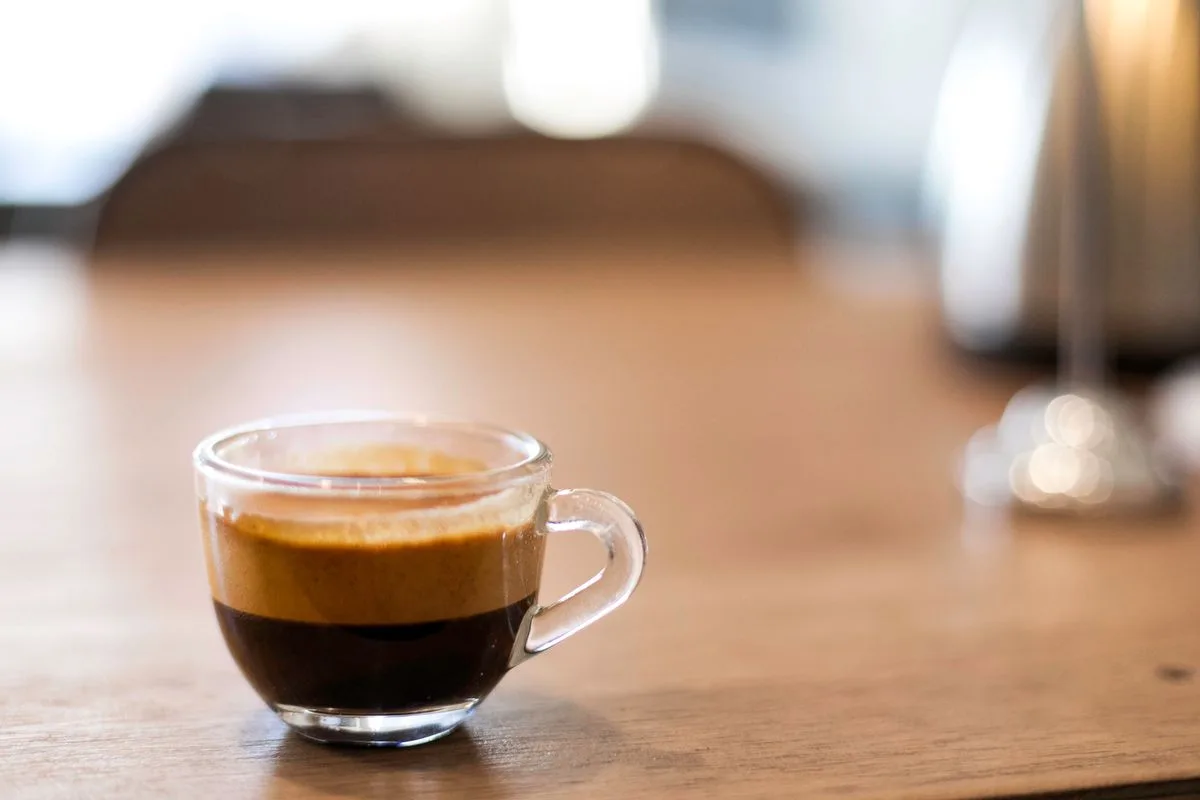
1. Coffee, and the three o'clock line
Caffeine does two separate jobs on the bladder. It is a mild diuretic, so your kidneys make more urine. It also makes the bladder muscle more excitable, so you feel the urge sooner at a lower volume.
Timing is the part men underestimate. Caffeine has a half-life of roughly five hours in a healthy adult, meaning a cup at four in the afternoon still has about a quarter of its caffeine circulating at two in the morning. Your body is not finished with it when you go to bed.
The practical version: make mid-afternoon your cut-off, and treat an after-dinner espresso as a deliberate decision rather than a habit.
2. Black and green tea, the one men forget
This is the quiet one. A strong mug of black tea carries somewhere around half the caffeine of a mug of coffee, and green tea is lower again but nowhere near zero.
Two mugs after dinner comes to about the same caffeine as the coffee somebody just proudly gave up. I have watched men cut coffee, replace it with tea, and then conclude that the whole idea was nonsense because nothing changed.
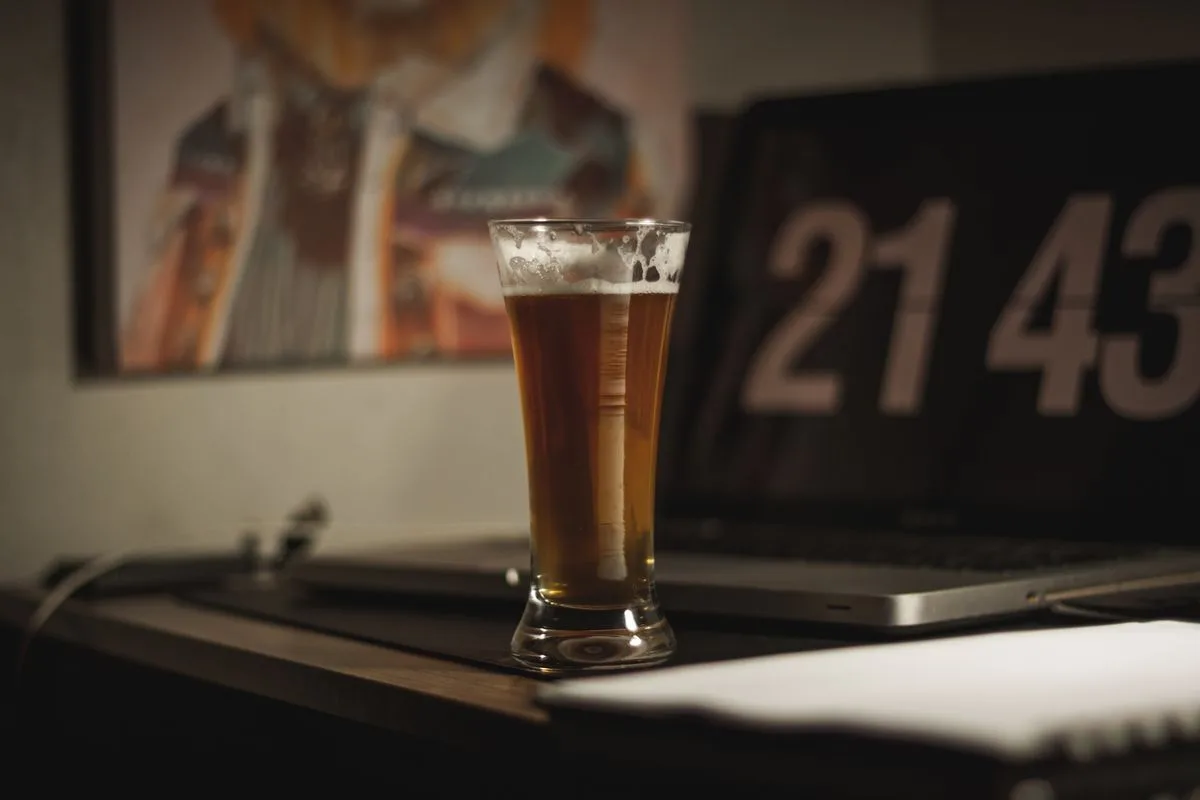
3. Beer, where volume is the bigger problem
A pint is roughly 570 ml of liquid before you account for the alcohol in it. For most men it is the single largest serving of anything they drink all evening.
That volume has to go somewhere, and a bladder that starts the night partly full has less room to absorb it. A pint at nine o'clock is more than half a litre arriving with three hours left to process it. It will not finish in time.
4. Wine and spirits, and the hormone problem
Alcohol has a second trick that has nothing to do with volume. Overnight, your kidneys are supposed to concentrate urine, under instruction from antidiuretic hormone. Alcohol suppresses that signal, so a small glass can produce a disproportionate amount of urine.
Here is the honest counterweight, because it cuts against what you would expect. A meta-analysis of 19 studies covering 120,091 men found that alcohol intake was associated with a lower likelihood of being diagnosed with BPH, not a higher one — while not reducing urinary symptoms.
Read that carefully, because it is easy to misuse. Drinking does not appear to grow the prostate. It just makes tonight worse.
5. Regular cola and caffeinated soft drinks
Non-diet cola was the other clear signal in the Boston data. Men drinking more than one serving a day had 1.75 times the odds of their voiding symptoms — hesitancy, weak stream, incomplete emptying — getting worse over the follow-up period.
Cola manages three things at once: caffeine, carbonation and a sugar load that pulls fluid along with it. It is the drink that most often hides in plain sight, because men who never touch coffee after lunch will happily have a cola with the evening meal.
6. Sparkling water and diet soda, the swap that doesn't help
This is where the honest answer gets less satisfying. Carbonation itself is widely listed as a bladder irritant, and plenty of men report more urgency with fizzy drinks regardless of caffeine.
The research is thinner here. In the Boston data, diet cola showed no clear association at baseline, so I cannot tell you the evidence is as solid as it is for coffee.
What I can say is that swapping a late cola for a late sparkling water changes less than men hope. If fizzy water is your evening drink and your nights are poor, two weeks of flat water is a cheap experiment.

How early should you stop drinking before bed?
Two to three hours is the usual starting point, and the hard part is that it applies to plain water too.
The National Institute of Diabetes and Digestive and Kidney Diseases puts it simply in its guidance on bladder control problems: limiting how much you drink before bedtime reduces how often you need to urinate while sleeping, and reducing alcohol and caffeine lowers the number of trips.
What this is not is permission to dehydrate yourself. Concentrated urine is more irritating to the bladder lining, and drinking too little raises the risk of urinary infections and kidney stones. The change is about timing, not total volume.
In practice that means front-loading. Most of your fluid before six o'clock, small sips afterwards if your mouth is dry, and nothing large in the last couple of hours.
- Move the water, don't remove it — aim for the same daily amount, just earlier.
- Empty twice before bed — go, wait thirty seconds, go again.
- Check your tablets — if you take a diuretic for blood pressure, ask your doctor whether the timing can move earlier in the day. That one change can outweigh everything on the drinks list.
- Test it for two weeks — write down your last drink and the number of trips. Two weeks is enough to see a pattern.
That written record does more than settle the argument with yourself. It is also the single most useful thing you can hand a doctor, and it pairs well with the early signs of an enlarged prostate most men have been explaining away for years.
What can you drink in the evening instead?
Water, mostly, and earlier than feels natural. Beyond that, a few things worth knowing.
Caffeine-free herbal teas. Chamomile, rooibos and peppermint are not caffeinated, which is their entire advantage. No trial shows they help an enlarged prostate. A large mug at ten o'clock is still a large mug of fluid at ten o'clock.
Decaf, with a small asterisk. Decaffeinated coffee is not caffeine free, but it carries a small fraction of the original, and for most men that is low enough to stop being the problem.
The citrus surprise. Orange juice appears on nearly every bladder-irritant list online. The same Boston study found the opposite: men drinking more than a cup of citrus juice a day had roughly 50% lower odds of their symptoms progressing. One cohort study is an association, not proof — but it is worth knowing before you give up orange juice on somebody's say-so.
Where a supplement sits in all this
Changing what you drink is free, and it works on the fluid arriving at the bladder. It does nothing about the gland doing the squeezing. That gap is where supplements get sold, so it is worth being precise about what they can and cannot reach.
The formula I looked at most closely for my own family is FlowForce Max, a chewable built around saw palmetto, rye flower pollen extract, nettle root, grape seed extract and zinc.
See the official FlowForce Max page →
If you buy through this link I receive a commission at no additional cost to you.
Does changing what you drink actually fix nocturia?
Partly, and I would rather give you the real size of the effect than oversell it.
A 2023 systematic review pulled together eight studies, seven of them randomised trials, on fluid and caffeine changes in adults with an overactive bladder. Cutting caffeine was statistically effective for urgency symptoms, and reducing caffeine and fluid together helped with frequency.
The same review is blunt about the limits. Most of the studies measured results after only four to six weeks. More than half bundled the drink changes in with other treatments, so the benefit cannot be cleanly attributed. The overall risk of bias was rated high because of missing data.
Restricting both caffeine and fluid was not effective for leaking episodes at all — which fits what you would expect, because leaking usually means the problem has moved past what an evening habit can influence.
My honest summary: this is a cheap, low-risk change that buys some men a trip or two a night. It is worth doing on day one. It does not open a narrowed urethra, and if your stream is the main symptom, the explanation for that sits in what causes a weak urine stream after 50.
When is the problem not the drinks at all?
Give the timing change a fair two weeks. If nothing moves, stop adjusting your evenings and book an appointment, because several other things produce the same symptom.
- Swollen ankles during the day. Fluid that pools in the legs while you are upright returns to the circulation when you lie down, and the kidneys process it overnight. That points at circulation, not beverages.
- Loud snoring with pauses in breathing. Sleep apnoea is a well-recognised driver of nighttime urination, and treating the apnoea is what fixes it.
- Trips that keep increasing despite everything above.
- Blood in the urine, fever, or pain when urinating — none of these wait for an experiment.
- You cannot urinate at all while your bladder feels full. That is acute urinary retention and it needs same-day care.
The reason I push people towards the appointment rather than another month of tweaking is that a blockage left alone does not hold still. My father-in-law spent years managing his evenings instead of his prostate, and the progression from nighttime trips to incontinence is the part nobody warned the family about.
If you want the plain version of what that first visit involves, it is set out in the main guide's section on seeing a urologist.
Once the appointment is behind you
If you have been assessed and want a low-stakes daily habit to sit alongside whatever your doctor recommended, FlowForce Max is the product I reviewed ingredient by ingredient, including the cost and the refund policy.
See the official FlowForce Max page →
Affiliate link. I earn a commission at no extra cost to you. Not medical advice, and not a replacement for seeing a doctor.
Frequently asked questions
How many hours before bed should I stop drinking fluids?
Two to three hours is the usual starting point, and it applies to plain water as well as coffee and beer. The goal is to move your fluid earlier in the day rather than drink less overall — concentrated urine irritates the bladder and raises the risk of infections and stones.
Is decaf coffee safe before bed if you have an enlarged prostate?
Decaf is not caffeine free, but it carries only a small fraction of the caffeine in regular coffee, and for most men that is low enough to stop mattering at night. The volume still counts. A large mug of decaf at ten o'clock is still a large mug of fluid arriving at ten o'clock.
Does beer make an enlarged prostate worse?
A meta-analysis of 19 studies covering 120,091 men found alcohol intake was associated with a lower likelihood of being diagnosed with BPH, not a higher one. What beer reliably does is make a single night worse: a pint delivers a large volume of fluid alongside alcohol that suppresses the hormone telling your kidneys to slow down overnight.
Is sparkling water bad for the bladder?
The evidence is thinner than for coffee or regular cola. Carbonation is often listed as a bladder irritant, and some men notice more urgency with fizzy drinks, but research separating the bubbles from the caffeine and sugar is limited. If sparkling water is your late-evening drink and your nights are poor, two weeks of flat water is a cheap test.
Will cutting these drinks stop me waking up at night?
It can reduce the number of trips, but it rarely stops them. A systematic review of eight studies found cutting caffeine helped urgency symptoms, while noting that most trials were short and low in certainty. If an enlarged prostate is physically narrowing the urethra, no change to what you drink opens that channel back up.

Why I write about this
Carla S.
I'm not a doctor and I won't pretend to be. I write about prostate health because I helped care for my father-in-law through years of it, sat in on the appointments, and read everything I could find while we worked out what was actually happening.
What I try to do here is separate the advice that has research behind it from the advice that gets repeated because it sounds sensible. More about why I started this site.
Medical disclaimer: I am not a physician, nurse, or licensed health professional. Nothing here is medical advice or a diagnosis. Always consult a doctor or urologist about your own symptoms, and before changing any prescribed medication or its timing.