
The short answer
Beta-sitosterol has the better trial evidence. Pooled trials found it improved symptom scores by about five points and peak urine flow by roughly 4 mL per second, while saw palmetto performed no better than placebo across 27 trials and 4,656 men. The catch: beta-sitosterol's trials are far smaller and shorter. Neither shrinks the prostate.
Before you read on
Some links on this page are affiliate links, including the ones to FlowForce Max. If you buy through one, I earn a commission at no extra cost to you. It never changes what I write here, including the parts that aren't flattering.
The two names sit next to each other on every prostate shelf in America, and almost nobody explains how differently they have been tested. This article puts the trials side by side, number for number.
My father-in-law took saw palmetto for four months before anyone in the family had heard of the other one. I have since read what the trials actually found, and the gap between the two surprised me.
What follows is the head-to-head. If you want the broader view of all three big prostate botanicals, that lives in what the research says about saw palmetto, beta-sitosterol and pygeum. This page goes deeper on just these two.
Which is better, beta-sitosterol or saw palmetto?
On the published results, beta-sitosterol. It is not close, and it is also not the whole story, because the two were tested at very different scales.
Here is everything that matters in one place. Every figure below comes from the primary source linked further down the page.
| What was measured | Saw palmetto | Beta-sitosterol |
|---|---|---|
| Men pooled in the Cochrane review | 4,656 across 27 randomized trials | 519 across 4 randomized trials |
| Dose used in the trials | 320 mg a day, tested up to 960 mg | 60 mg to 130 mg of free sterols a day |
| How long the trials ran | 4 to 72 weeks | 4 to 26 weeks |
| Urinary symptom score vs placebo | Little to no difference (IPSS −0.90, high certainty) | Better by 4.9 IPSS points (95% CI −6.3 to −3.5) |
| Peak urine flow vs placebo | No improvement (+0.40 mL/s, CI crosses zero) | +3.91 mL/s (95% CI 0.91 to 6.90) |
| Leftover urine after voiding | Not reported as improved in the pooled reviews | −28.62 mL (95% CI −41.42 to −15.83) |
| Prostate size | No change | No change |
| Dropouts from side effects | Same rate as placebo (RR 1.01) | 7.8% vs 8.0% on placebo |
| Certainty of the evidence | High — we are confident it does little | Low — few, small, short trials |
Read the last row twice. High certainty that something barely works is a stronger finding than low certainty that something does work. Saw palmetto has been settled. Beta-sitosterol has been encouraging and under-tested for thirty years.
Doesn't saw palmetto already contain beta-sitosterol?
It does, in small amounts, and almost nobody mentions it. Saw palmetto berry oil is mostly fatty acids, with a minor fraction of plant sterols that includes beta-sitosterol.
How minor? A 2020 randomized trial built its whole design around that question. Ordinary saw palmetto oil in that study contained 0.2% to 0.3% beta-sitosterol, and the researchers compared it against a version deliberately enriched to 3%.
Do the arithmetic on a standard capsule. A 320 mg dose of saw palmetto oil at 0.2% delivers under a milligram of beta-sitosterol. The trials that found a benefit used 60 mg to 130 mg a day.
That single calculation explains a lot of shelf confusion. Buying saw palmetto because it "contains beta-sitosterol" is like buying orange juice for the fibre. Technically true, nutritionally irrelevant.
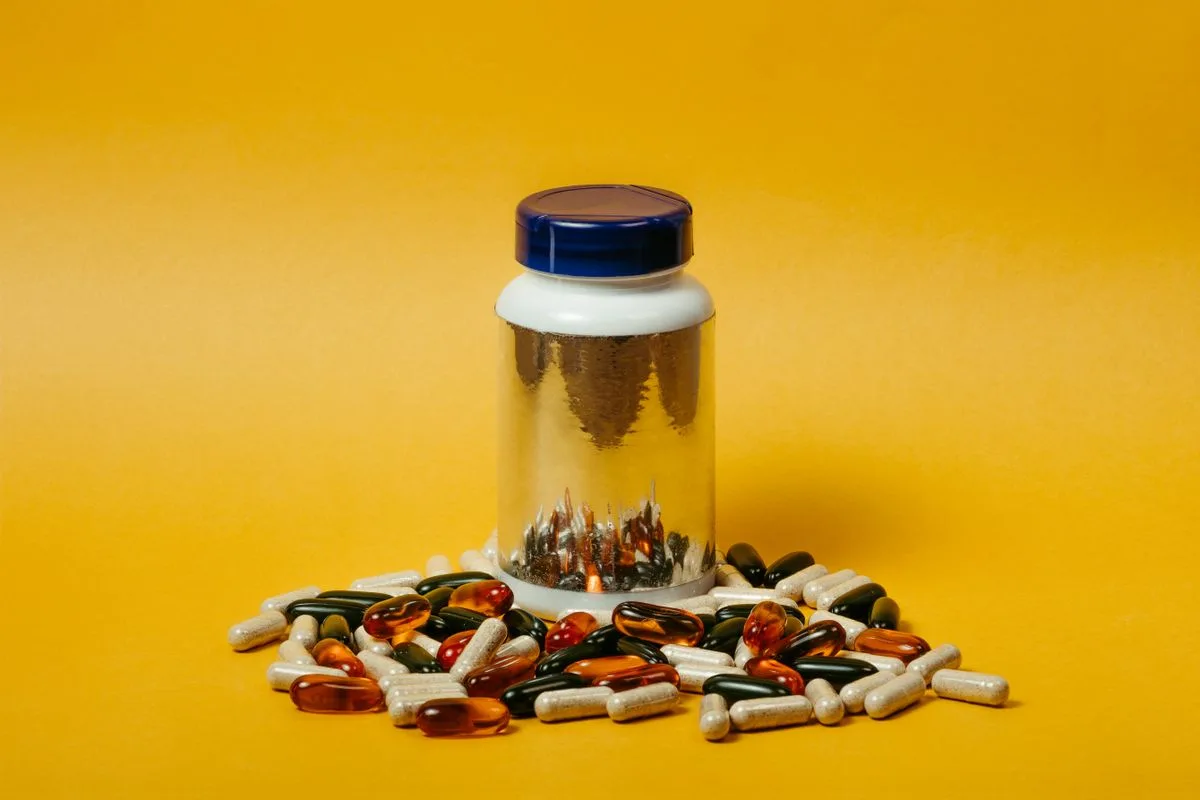
What did the big saw palmetto trials actually find?
Three results carry the weight here, and all three point the same way.
The one-year trial: 225 men, no difference
In the STEP trial, published in the New England Journal of Medicine, 225 men over 49 took 160 mg of saw palmetto twice a day or placebo for a year. The difference in symptom score was 0.04 points. Peak flow, prostate size, leftover urine and PSA all came out the same.
The dose-escalation trial: triple the dose, still nothing
CAMUS answered the obvious follow-up question. Were men simply not taking enough? Over 72 weeks, 369 men went from one to two to three standard doses.
Points of symptom-score difference after 72 weeks in the CAMUS trial — and the difference favoured placebo. Men on up to 960 mg of saw palmetto a day improved by 2.20 points; men on placebo improved by 2.99. Source: Barry et al., CAMUS trial, JAMA (2011)
The pooled verdict
The 2023 Cochrane review gathered 27 trials and 4,656 men and rated the evidence high certainty. Saw palmetto alone produced little to no difference in symptoms or quality of life, at three to six months and again at twelve to seventeen months.
Peak urine flow tells the same story. The previous Cochrane update pooled the three high-quality medium-to-long trials and found a difference of 0.40 mL per second, with a confidence interval that crosses zero. Prostate size did not change either.
The National Center for Complementary and Integrative Health at the NIH says the same thing in one sentence: saw palmetto alone provides little or no benefit for these symptoms. It also notes the herb is well tolerated, with mild and infrequent side effects.
Safe and ineffective is an unusual combination to report, and it is what the data says.
What did the beta-sitosterol trials find?
Smaller studies, bigger effects, and a thirty-year silence afterwards.
The Cochrane review of beta-sitosterol pooled four double-blind placebo-controlled trials covering 519 men, running 4 to 26 weeks. Symptom scores improved by 4.9 IPSS points, peak flow by 3.91 mL per second, and leftover urine fell by 28.62 mL.
The largest single trial was published in The Lancet in 1995: 200 men, 20 mg three times a day, six months. Peak flow rose from 9.9 to 15.2 mL per second. Leftover urine dropped from 65.8 mL to 30.4 mL. The placebo group did not move.
A second multicentre trial gave 177 men 130 mg of free beta-sitosterol daily for six months and reported a 5.4-point symptom advantage over placebo, with peak flow up 4.5 mL per second.
One follow-up looked past the six-month mark. Of the original Lancet participants, 117 were re-examined at 18 months; the 38 men who kept taking beta-sitosterol held their gains, and the men who stopped drifted slightly backwards. That is the longest look anyone has published, and it is an open extension rather than a controlled trial.
Dose matters here more than brand, and the numbers above are the ones worth writing down. I have put all of them, plus how the different forms compare, in the full guide to beta-sitosterol dosage for the prostate — that is the page to read before you buy anything.
Where FlowForce Max sits in this comparison
FlowForce Max takes a different route to the same goal. It leads with Graminex flower pollen extract — the botanical with the strongest randomized-trial record in this category — and builds saw palmetto and nettle root around it, in a once-daily chewable.
Read the full FlowForce Max review →
If you buy through this link I receive a commission at no additional cost to you.
Does beta-sitosterol lower DHT?
Nobody has shown that it does, and the claim is everywhere.
Dihydrotestosterone, or DHT, is the hormone that drives prostate growth, and the prescription drugs that shrink the gland work by blocking the enzyme that makes it. Supplement marketing borrows that story freely.
The human beta-sitosterol trials never measured DHT at all. Not the Lancet trial, not the 177-man trial, not the Cochrane pooling. The outcome everyone cites was simply never an outcome.
The closest anyone has come is the 2020 trial above, which measured 5-alpha-reductase activity directly. In the beta-sitosterol-enriched group the enzyme barely moved, and the comparison between all three groups was not significant.
Which leaves an honest gap. Beta-sitosterol appears to help some men urinate better, and nobody has established why. Any product claiming it blocks DHT is describing a mechanism, not a measurement.
Can beta-sitosterol lower PSA?
On the evidence, no — and that is good news rather than bad.
In the 2020 trial, PSA fell by 0.07 ng/mL in the enriched group, a change that was not statistically significant. A separate combination trial also reported no significant PSA difference against placebo.
Why it matters: a supplement that suppressed PSA could make a reading look reassuring when it should not. Nothing in the beta-sitosterol data suggests that happens. Your screening number should still mean what it normally means.
Tell whoever orders the test what you are taking anyway. It costs you one sentence, and it removes any question later.
Can I take saw palmetto with beta-sitosterol?
Plenty of products already do, and one randomized trial tested exactly that mix.
A three-month trial of 144 men gave a combination of cernitin, saw palmetto, beta-sitosterol and vitamin E or placebo. Nighttime urination dropped significantly in the combination group, daytime frequency improved, and the total symptom score beat placebo. Flow rate, leftover urine and PSA did not change.
That is a real result for nocturia specifically, which is the symptom this whole site was built around. If nighttime trips are your main complaint, the mechanism behind them is laid out in the main guide to waking up at night to urinate after 50.
The honest limits are worth stating. That trial had no arm testing beta-sitosterol on its own, so it cannot tell you the pair beats the sterol alone. And when the 2023 Cochrane review pooled saw palmetto combinations, the certainty of the evidence was low.
Taking both is unlikely to hurt. Dropout rates for both ingredients matched placebo in the pooled trials. Safety is not the same as being free of interactions, though, and what to watch for is set out in beta-sitosterol side effects in men.
So which one should you try first?
If you are choosing between the two on evidence alone, beta-sitosterol is the one with trials behind it. Four points stay true no matter which you pick.
- Check the back label, not the front. "Saw palmetto with plant sterols" at 0.2% is not a beta-sitosterol product. Look for the milligrams of free sterols.
- Use a trial dose and a trial timeline. The studies ran 60 mg to 130 mg a day for six months. Judging a bottle after three weeks tells you nothing.
- Expect symptoms to ease, not the gland to shrink. Neither ingredient reduced prostate size in any trial.
- Measure it. Count your night trips for three days before you start and three days at week eight. A placebo response in BPH trials is large, and your memory is not a measuring device.
None of this replaces a diagnosis. A supplement cannot tell you whether a weak stream after 50 comes from an enlarged prostate or something else, and the early signs most men explain away are worth reading before you spend anything.
That is the part I would go back and change. My father-in-law spent four months on the wrong bottle before anyone measured anything, and the measuring was the part that would have helped.
If you want one bottle instead of three
FlowForce Max is the formula I researched most closely for my own family: Graminex flower pollen extract, saw palmetto, nettle root, grape seed, muira puama and zinc in a single daily chewable. Free US shipping, no subscription, and 60 days to change your mind, opened bottles included. $69 for one bottle, $59 each for three, $49 each for six.
See the official FlowForce Max page →
Affiliate link. I earn a commission at no extra cost to you. It does not contain added beta-sitosterol. A supplement is not a treatment for an enlarged prostate and is never a substitute for being examined.
Frequently asked questions
Which is better, beta-sitosterol or saw palmetto?
Beta-sitosterol, on the trial results. Pooled beta-sitosterol trials improved symptom scores by 4.9 IPSS points and peak flow by 3.91 mL per second against placebo. Saw palmetto, pooled across 27 trials and 4,656 men, produced little to no difference. The caveat is size: 519 men studied versus 4,656.
Can I take saw palmetto with beta-sitosterol?
Plenty of products already combine them, and a randomized trial of 144 men on cernitin, saw palmetto, beta-sitosterol and vitamin E found significantly less nocturia and a better total symptom score after three months. No trial has shown the pair beats beta-sitosterol alone. Ask your pharmacist before adding either to a prescription.
Can beta-sitosterol lower PSA?
There is no good evidence that it does. The 12-week trial that measured PSA directly found no significant change in the beta-sitosterol-enriched group, and a separate combination trial reported no significant PSA difference versus placebo. Treat your PSA reading as unaffected, and tell your doctor what you take anyway.
Does beta-sitosterol lower DHT?
Nobody has shown that it does. The human trials behind beta-sitosterol never measured DHT. The one trial that measured 5-alpha-reductase activity, the enzyme that makes DHT, found no significant change in any group, including the beta-sitosterol-enriched arm. The mechanism is still unexplained.
Is beta-sitosterol better than saw palmetto for urine flow?
On the pooled numbers, yes. Beta-sitosterol raised peak urine flow by 3.91 mL per second across four trials. Saw palmetto showed no improvement in peak flow, with a pooled difference of 0.40 mL per second whose confidence interval crosses zero. Neither reduced prostate size.

Why I write about this
Carla S.
I'm not a doctor and I won't pretend to be. I write about prostate health because I helped care for my father-in-law through years of it, sat in on the appointments, and read everything I could find while we worked out what was actually happening.
Comparisons like this one are the pages I wish had existed when we were standing in a pharmacy aisle guessing. More about why I started this site.
Medical disclaimer: I am not a physician, nurse, or licensed health professional. Nothing here is medical advice or a diagnosis. Supplements are not treatments for an enlarged prostate. Always consult a doctor or urologist about your own symptoms and before starting anything new.