
The short answer
The four placebo-controlled trials used 60 to 195 mg of beta-sitosterol a day, split into two or three doses. Men reported better symptom scores and a faster stream within four to twenty-four weeks. It did not shrink the prostate in any trial, and nobody has tested it beyond eighteen months.
Before you read on
Some links on this page are affiliate links, including the ones to FlowForce Max. If you buy through one, I earn a commission at no extra cost to you. It never changes what I write here, including the parts that aren't flattering.
Beta-sitosterol is the one prostate ingredient where the research looks better than its reputation. The problem is that almost nothing written about it tells you the number you actually need: how much, how often, and for how long.
I went through the trials one at a time, pulled the dose out of each, and wrote them down in a table. It took an afternoon. Nobody selling the stuff seems to have bothered.
This page is the result. If you want the wider picture of how this ingredient compares with the rest of the shelf, that is in what the research actually says about saw palmetto, beta-sitosterol and pygeum. This one stays on dose, timing and what to expect.
Does beta-sitosterol really work for the prostate?
The honest answer is yes, in small studies, for symptoms, over months rather than years.
A pooled review gathered every randomized, placebo-controlled, double-blind trial it could find and came up with four of them, covering 519 men in total, lasting between four and twenty-six weeks. That is the entire human evidence base, and it is worth knowing how small it is before anyone quotes it at you.
Across 4 randomized placebo-controlled trials in 519 men, beta-sitosterol improved urinary symptom scores by a pooled 4.9 IPSS points, raised peak urine flow by 3.91 mL per second, and cut leftover bladder volume by 28.6 mL. Source: Wilt et al., Beta-sitosterols for benign prostatic hyperplasia, Cochrane Database of Systematic Reviews
Those are meaningful numbers. A 4.9-point drop on a 35-point symptom scale is the difference most men would describe as noticeably better, not merely measurable.
The same review ends on a sentence the sales pages leave out: the long-term effectiveness, safety and ability to prevent complications of an enlarged prostate are not known. Four short trials cannot answer that, and four short trials is what exists.
How much beta-sitosterol should I take for BPH?
Here are the four trials with their actual doses. This is the table I could not find anywhere else, which is the reason this article exists.
| Trial | Men | Daily dose | Length |
|---|---|---|---|
| Berges, 1995 | 200 | 60 mg — 20 mg three times a day | 24 weeks |
| Klippel, 1997 | 177 | 130 mg — 65 mg twice a day | 24 weeks |
| Fischer, 1993 | 80 | 195 mg — 65 mg three times a day | 4 weeks |
| Kadow, 1986 | 62 | 0.3 mg of a glucoside form | 24 weeks |
Three things jump out of that table.
The first is the spread. A man following the Berges schedule takes 60 mg a day. A man following Fischer takes more than three times that. Both trials reported benefit, which means nobody has established a minimum effective dose.
The second is that every single one of them divided the daily amount. Two doses or three, never one. That is the detail most often lost between a journal and a bottle.
The third is that odd last row. Kadow used 0.3 mg of a sugar-bound form called beta-sitosteryl-beta-D-glucoside, a different molecule at a thousandth of the dose. The review kept it separate for exactly that reason, and so should you when someone waves a milligram figure at you.
The best-documented schedule is the 60 mg one. It is the only trial that enrolled 200 men, ran a full six months, and was then followed up again a year later.
Why doesn't the dose on the label match the trials?
Pick up most prostate supplements and you will not find "beta-sitosterol 60 mg" printed anywhere. You will find saw palmetto at 320 mg, or a proprietary blend, or a line about plant sterols with no number attached.
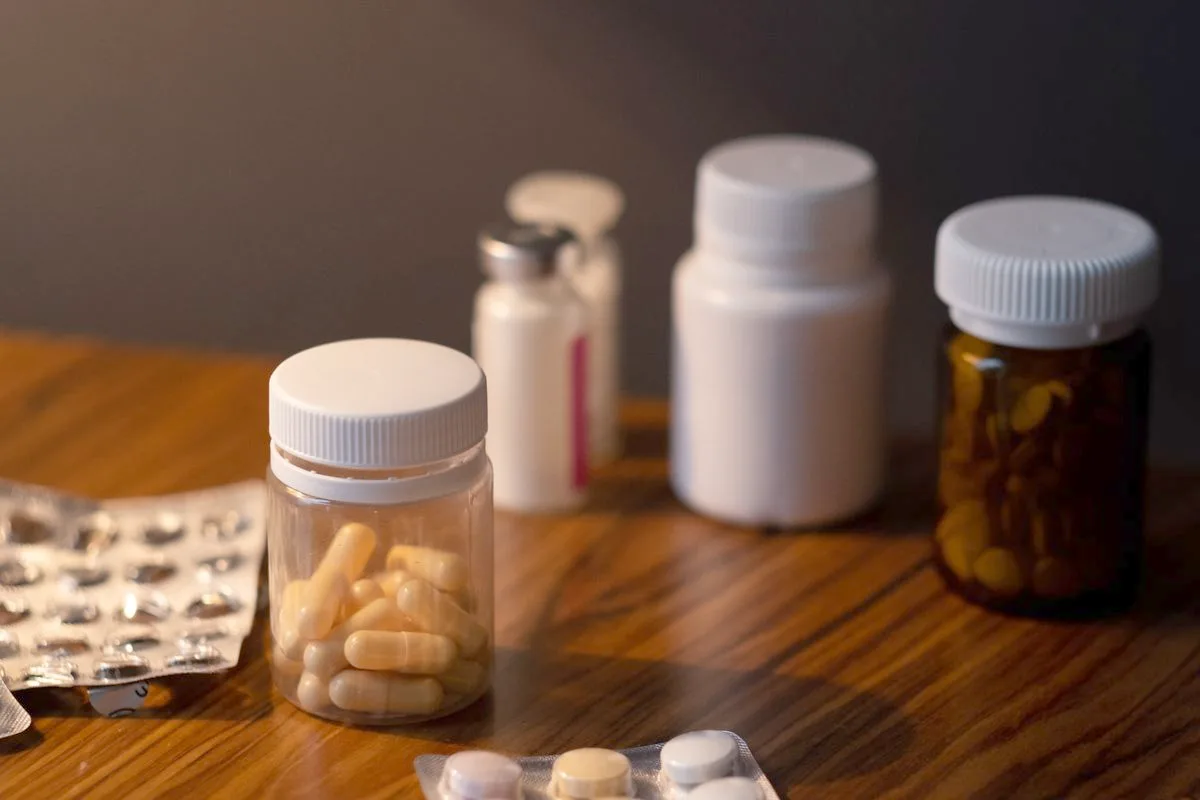
There are three reasons for the gap, and none of them is a conspiracy.
Saw palmetto extract naturally contains beta-sitosterol, but only a small fraction of it by weight. A 320 mg saw palmetto softgel does not deliver 320 mg of sterol, and a label that lists the extract is not claiming it does.
Blends hide the number by design. Once several botanicals share one "proprietary complex" figure, the manufacturer is not obliged to break out how much of each you are getting.
And the trial products were pharmaceutical preparations sold in Germany, standardised to a stated sterol content. The American supplement shelf was never built to match them. That mismatch is worth keeping in mind before you assume a bottle reproduces a trial.
The National Center for Complementary and Integrative Health makes the same point about plant treatments for an enlarged prostate generally: the studies were short, run on small groups, and used varied formulations. Varied formulations is the polite version of what the shelf looks like.
If you want a practical rule, it is this. Look for a product that prints a sterol figure in milligrams. If it only prints an extract weight or a blend total, you cannot work out your dose, and neither can anyone else.
A different route: one finished formula instead of a sterol count
Some men would rather not audit labels at all. FlowForce Max takes the other approach, and builds on Graminex flower pollen extract instead — the prostate botanical with the strongest randomized-trial record in the category.
A systematic review of four trials covering 444 men found flower pollen extract roughly doubled the odds of men rating their urinary symptoms as improved, compared with placebo. Saw palmetto and nettle root sit alongside it in a single daily chewable.
Read the full FlowForce Max review →
If you buy through this link I receive a commission at no additional cost to you.
How long does beta-sitosterol take to work?
Shorter than most people assume, and longer than most people wait.
The Fischer trial ran four weeks and still measured a difference against placebo. That is the fastest signal in the set, and it suggests this is not an ingredient that needs half a year before anything happens.
The two six-month trials show the fuller version. In the 1995 Lancet trial of 200 men on 60 mg a day, the treated group's symptom score fell by 6.7 points against 2.1 on placebo, peak flow rose from 9.9 to 15.2 mL per second, and leftover bladder volume dropped from 65.8 to 30.4 mL.
Those flow figures are worth sitting with. Going from 9.9 to 15.2 mL per second is the difference between a stream a man complains about and one he stops noticing. If that is the symptom bothering you most, the mechanism behind it is explained in what causes a weak urine stream after 50.
A sensible personal plan: give it eight to twelve weeks, keep a rough note of night trips and how the stream feels, and stop if nothing has moved. That is long enough to be fair to it and short enough not to waste a year.
What happens if you keep taking it?
One trial answers this, and it is the most useful study in the whole set.
The Berges group went back to their patients eighteen months after enrolment, by which point the blinded phase was long over and men had been free to choose what they did next. Of the 117 who could be analysed, four groups emerged.
- 38 men kept taking beta-sitosterol. Their symptom scores, flow and residual volume stayed stable across the whole eighteen months.
- 41 men stopped and took nothing. Symptom scores and leftover volume drifted slightly worse, though peak flow held.
- 27 men who had been on placebo started it. They improved to the same extent the original treated group had.
- 18 former placebo patients stayed on nothing. They showed no sign of improvement at all.
Read that as two separate findings. The benefit holds while you take it, and it fades when you stop. This is maintenance, not a cure, and the authors themselves called for more trials before anyone concludes it works.
What is the best time of day to take it?
Nobody has tested morning against evening, so any confident answer you read is somebody's opinion dressed up as advice.
What the trials do tell you is the shape of the schedule. Berges used three doses a day, Klippel used two, Fischer used three. None used a single daily dose, and none reported what happens if you take it all at once.
Plant sterols are fat-soluble, which is the ordinary reason supplements of this type are taken with food rather than on an empty stomach. Tying each dose to a meal also solves the real problem, which is remembering.
If your main complaint is getting up at night, it is tempting to load the evening dose and hope. There is no trial support for that, and the things that genuinely do shift night trips are covered in the main guide to waking up at night to urinate after 50.
Does beta-sitosterol shrink the prostate?
No. This is the clearest finding in the file, and the one most often blurred in marketing copy.
The pooled review states that beta-sitosterols did not reduce prostate size compared with placebo. The 1995 Lancet trial put it in its own words: no relevant reduction of prostatic volume was observed in either group, treated or not.
That is not a failure, once you understand what changed instead. Men emptied more completely and their stream improved while the gland stayed exactly the same size, which points at the muscle tone and inflammation around the bladder neck rather than at the bulk of the prostate.
It matters practically, too. A product that genuinely shrinks the gland changes what a doctor sees on an ultrasound and what your treatment options are. One that eases symptoms without touching size does not, which is why the appointment still belongs on your list.
Can beta-sitosterol lower your PSA?
There is no trial evidence that it does. None of the four placebo-controlled studies reported a fall in PSA, and the pooled review does not list it among the outcomes that changed.
This is the opposite of the situation with prescription 5-alpha reductase inhibitors, which lower PSA substantially and oblige doctors to reinterpret the result. Beta-sitosterol has not been shown to do that.
Which does not mean you should stay quiet about it. Tell whoever orders the test what you are taking, every time. Supplements are the thing men most often forget to mention and doctors most often wish they had heard, a point covered in when to see a urologist about prostate symptoms.
What should you realistically expect?
A 2023 review in the American Journal of Clinical and Experimental Urology is blunter than most, and more useful for it.
It concludes that beta-sitosterol significantly improves lower urinary tract symptoms, but generally less effectively than prescription alpha-blockers or 5-alpha reductase inhibitors. From that, the authors suggest supplements containing it may suit younger men with minimal symptoms who would rather not start a drug regimen yet.
That sentence is the fairest summary of this ingredient I have read. It is a reasonable first move for mild, early symptoms. It is not a substitute for treatment once symptoms are moderate, and it was never tested as one.
On tolerability, the pooled review found withdrawal rates of 7.8% on beta-sitosterol against 8.0% on placebo, which is as unremarkable as a side-effect profile gets in a short trial. The longer view, including who should not take it at all, is in beta-sitosterol side effects in men.
And if you are weighing it against the ingredient on every second bottle, the two have very different evidence behind them. That comparison is in beta-sitosterol vs. saw palmetto.
My father-in-law took a prostate supplement for a while without anyone in the family knowing what was in it or how much. I don't think it hurt him. I do think the afternoon it would have taken to read the label was an afternoon worth spending, and we never spent it.
If you'd rather buy a finished formula than build a dose
FlowForce Max is the product I researched most closely for my own family. It is built on Graminex flower pollen extract — four randomized trials, 444 men, roughly double the odds of reporting improved urinary symptoms — with saw palmetto and nettle root alongside it, in one chewable a day.
It does not contain added beta-sitosterol, so think of it as a different approach rather than a cheaper route to the dose above.
Current pricing from the official page: $69 for one bottle, $59 each for three, $49 each for six. Free US shipping, and a 60-day money-back guarantee.
See the official FlowForce Max page →
Affiliate link. I earn a commission at no extra cost to you. A supplement is not a treatment for an enlarged prostate, and it is never a substitute for being examined.
Frequently asked questions
Does beta-sitosterol really work for the prostate?
In four placebo-controlled trials covering 519 men, beta-sitosterol improved urinary symptom scores by a pooled 4.9 points on the IPSS and raised peak urine flow by 3.91 mL per second. That is a real effect in small, short trials. It is not proof that it changes the long-term course of an enlarged prostate, because nobody has tested that.
How much beta-sitosterol should I take for BPH?
The non-glucosidic trials used 60 mg, 130 mg or 195 mg of beta-sitosterol a day, always divided into two or three doses. The 60 mg schedule is the best documented, because that trial ran six months in 200 men and was followed up at eighteen months. Ask your doctor before starting, especially if you already take a prostate medication.
How long does beta-sitosterol take to work?
The trials ran from four to twenty-six weeks, and the shortest of them already measured a difference at four weeks. The six-month trials showed the fuller picture. A fair plan is to judge it at eight to twelve weeks rather than after a fortnight, and to stop if nothing has changed by then.
Does beta-sitosterol shrink the prostate?
No. The pooled review states plainly that beta-sitosterols did not reduce prostate size compared with placebo, and the largest single trial reported no relevant reduction in prostate volume in either group. Men felt better and emptied better while the gland stayed the same size.
Can beta-sitosterol lower your PSA?
No trial in the pooled review reported a drop in PSA, so there is no evidence that it lowers the number the way a prescription 5-alpha reductase inhibitor does. Do not assume your PSA result is being masked, and do not assume it isn't. Tell whoever orders the test exactly what you are taking.
What is the best time of day to take beta-sitosterol?
No trial compared morning with evening, so anyone who gives you a confident answer is guessing. What the trials did do is split the daily amount across two or three doses tied to meals. Picking the meals you never skip is the part that actually matters, because a dose missed four days a week is not the dose that was studied.

Why I write about this
Carla S.
I'm not a doctor and I won't pretend to be. I write about prostate health because I helped care for my father-in-law through years of it, sat in on the appointments, and read everything I could find while we worked out what was actually happening.
Pulling the dose out of four old trials is the kind of job I wish somebody had done for us. More about why I started this site.
Medical disclaimer: I am not a physician, nurse, pharmacist or licensed health professional. Nothing here is medical advice, a diagnosis, or a dosing recommendation. Talk to a doctor or pharmacist before starting any supplement, especially if you take prescription medication, and seek emergency care immediately if you are unable to urinate.