The short answer
The richest everyday sources are pistachios, almonds, avocado, canola oil, sesame, soybeans and dried peas and beans. One ounce of pistachios gives about 56 mg of beta-sitosterol, close to the 60 mg a day used in the best-known prostate trial. Pumpkin seeds, sold as prostate food, contain very little.
Before you read on
Some links on this page are affiliate links, including the ones to FlowForce Max. If you buy through one, I earn a commission at no extra cost to you. It never changes what I write here, including the parts that aren't flattering.
Every list of "prostate foods" names the same handful of things. Very few of them say how much of anything is actually in the food, or how that amount compares with what was tested in men.
This page does the arithmetic. The numbers come from the USDA's food composition database and a laboratory study of nuts and seeds sold in the United States, and they are set directly against the doses used in the beta-sitosterol trials.
If you came for the supplement side of the question, meaning how much men take, when, and for how long, that lives in the beta-sitosterol dosage guide. This page is about the kitchen.
Which foods are highest in beta-sitosterol?
Beta-sitosterol is the most common plant sterol in the food supply. It sits in the fatty part of plants, which is why nuts, seeds, oils and legumes fill the top of the list and lettuce barely appears on it.
| Food | Amount | Serving |
|---|---|---|
| Beta-sitosterol alone | ||
| Avocado, raw | ~76 mg | Half a medium fruit (about 100 g) |
| Canola oil | ~58 mg | 1 tablespoon |
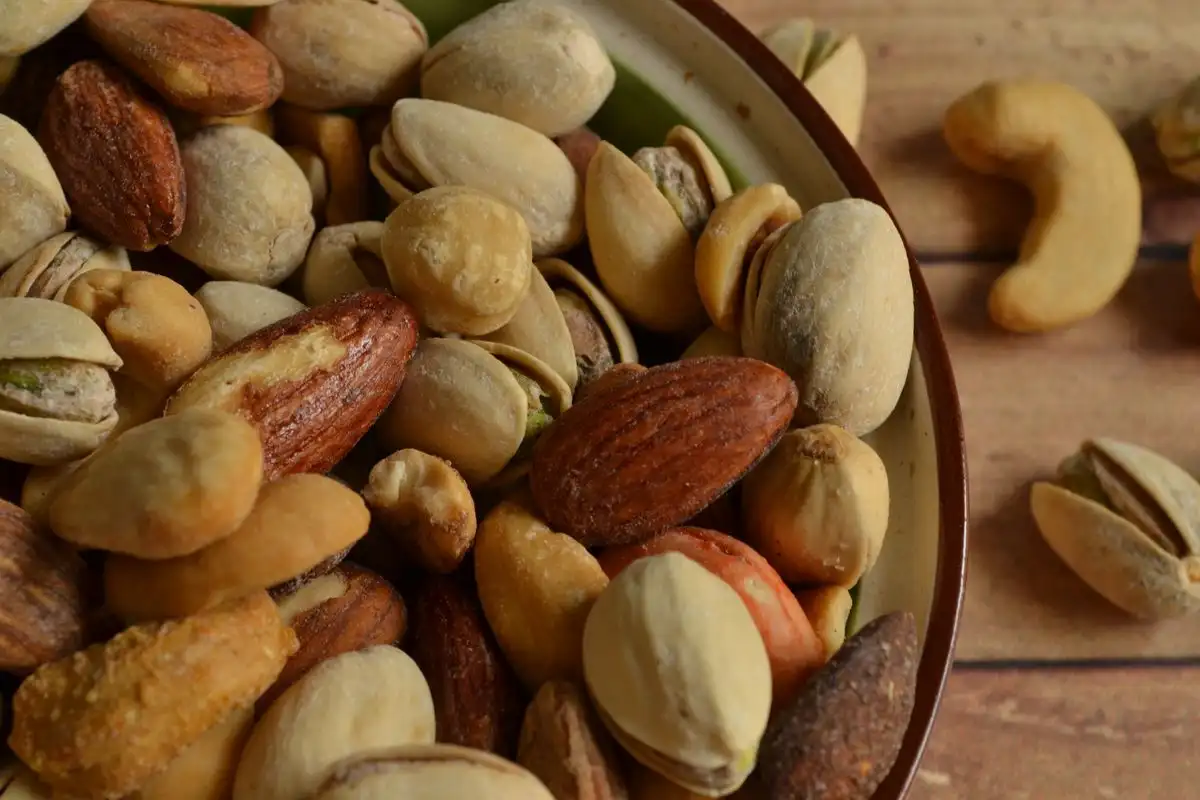
| Pistachios, raw | ~56 mg | 1 ounce (about 49 kernels) |
| Almonds | ~37 mg | 1 ounce |
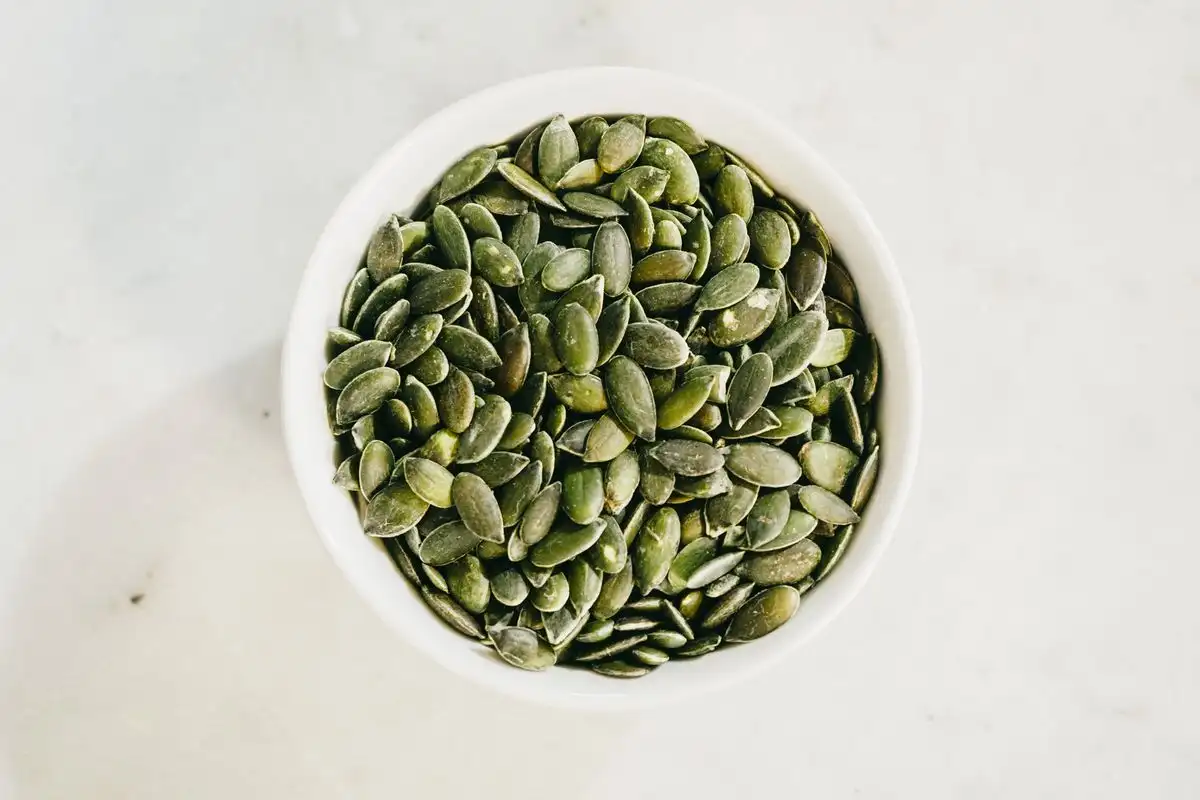
| Pumpkin seed kernels | ~4 mg | 1 ounce |
| All plant sterols combined | ||
| Soybeans, dried | 149 mg | ½ cup, uncooked |
| Dried peas | 133 mg | ½ cup, uncooked |
| Sesame oil | 118 mg | 1 tablespoon |
| Kidney beans, dried | 117 mg | ½ cup, uncooked |
| Lentils, dried | 54 mg | ½ cup, uncooked |
| Cashews | 45 mg | 1 ounce |
| Orange | 34 mg | 1 fruit |
| Olive oil | 30 mg | 1 tablespoon |
Sources: beta-sitosterol values calculated per serving from USDA FoodData Central (SR Legacy: avocado 76 mg, pistachios 198 mg, almonds 130 mg and canola oil 413 mg per 100 g). Plant sterol totals from the Linus Pauling Institute, Oregon State University. Pumpkin seed from Phillips et al., 2005.
Two things about this table matter. The first is the split into two groups. The USDA lists beta-sitosterol on its own for some foods, while the Oregon State table counts all plant sterols together. Beta-sitosterol is usually the largest share of that total, so the two groups are close relatives, not the same number.
The second is that these figures probably run low. When chemists at Virginia Tech measured nuts and seeds sold in the US, they found more plant sterol than the databases list, because the standard method misses a sugar-bound form called steryl glycosides.
Their highest totals were in sesame seed and wheat germ, at 400 to 413 mg per 100 g. Among foods eaten as snacks, pistachios and sunflower kernels came out on top, at 270 to 289 mg per 100 g.
Are pumpkin seeds good for the prostate?
Pumpkin seeds appear on nearly every prostate food list, and they are often described as a good source of beta-sitosterol. The laboratory numbers say otherwise.
In the Virginia Tech analysis, pumpkin seed kernels had a high total plant sterol content of 265 mg per 100 g. Only 13 mg of that was beta-sitosterol. An ounce of pumpkin seeds therefore delivers about 4 mg, roughly one-ninth of what an ounce of almonds gives.
That does not make pumpkin seeds useless. It means their reputation does not come from beta-sitosterol.
They have their own trial. In the German GRANU study, 1,431 men aged 50 to 80 with prostate symptoms were randomly assigned to whole pumpkin seed (5 g twice a day), a pumpkin seed extract capsule, or a placebo for a full year.
After 12 months, 58.5% of men eating the seeds had a meaningful drop in their symptom score, against 47.3% on placebo. The extract capsule did no better than placebo. The authors wrote that a confirmatory study is still needed before recommending it.
Ten grams of pumpkin seed a day contains a little over 1 mg of beta-sitosterol. Whatever helped those men, it was not the ingredient this page is about.
Can you eat as much beta-sitosterol as the trials used?
On paper, yes, and more easily than most people expect.
The best-documented trial, published in The Lancet in 1995, gave 200 men 60 mg of beta-sitosterol a day for six months. A second trial in 177 men used 130 mg a day, and a short third one used 195 mg.
One ounce of raw pistachios contains about 56 mg of beta-sitosterol, using the USDA value of 198 mg per 100 g. That is within a few milligrams of the 60 mg daily dose in the 1995 Lancet trial. Source: USDA FoodData Central, SR Legacy, "Nuts, pistachio nuts, raw" (FDC ID 170184)
Add half an avocado and the total reaches about 132 mg, the dose from the second trial. Cook dinner in a tablespoon of canola oil and you pass 190 mg, close to the highest dose any of these trials used.
So quantity is not the obstacle. The real question is whether eating those milligrams does what swallowing them in a capsule did, and that is where the evidence runs out.
If food has it, why did the trials use extracts?
There are three reasons, and each one is a real limit on what you can conclude from the table above.
1. The men in the trials were already eating it
Every man in those studies, including every man on placebo, kept eating his usual diet. Present-day diets supply an estimated 150 to 450 mg of plant sterols a day, according to the Linus Pauling Institute. The extract was added on top of that.
So the trials did not compare beta-sitosterol with none. They compared an ordinary diet with an ordinary diet plus 60 to 195 mg extra. A man adding pistachios and avocado to his usual meals is doing something similar on quantity alone. Nobody has tested whether it works the same way.
2. Very little of it is absorbed
Less than 5% of the plant sterols you eat reach the bloodstream, compared with 50% to 60% of dietary cholesterol. The body actively pumps most of the rest back into the gut.
That is true for capsules as well as food, so it does not make food worse. It does mean that milligrams on a label and milligrams in the body are very different numbers, and nobody has compared how food and extract behave once inside.
3. An extract can be measured; a meal cannot
A trial needs every man to get the same dose every day, plus a placebo that looks identical. That is easy with a capsule and impossible with a bowl of nuts. It is the practical reason supplement trials exist, not proof that capsules work better.
Put those three together and the honest conclusion is narrow. Food can supply trial-sized amounts of beta-sitosterol, and no study has checked whether that matters for the prostate.
If you'd rather take a different route entirely
Food is one road. FlowForce Max is a different one, and it's the formula I researched most closely for my own family. It contains no added beta-sitosterol at all — it's built around Graminex flower pollen extract, saw palmetto and nettle root instead.
Read the full FlowForce Max review →
If you buy through this link I receive a commission at no additional cost to you. It has its own cautions — skip it if you have a grass or flower pollen allergy, and check with your pharmacist if you take prescription medication.
Does a plant-heavy diet lower the risk of BPH?
This is where diet has its strongest evidence, though not for beta-sitosterol specifically.
Researchers followed 4,770 men from the placebo arm of the Prostate Cancer Prevention Trial for seven years. None had BPH at the start. By the end, 876 had developed symptomatic BPH, and their eating habits told a fairly clear story.
Men who ate four or more servings of vegetables a day had a 32% lower risk of developing symptomatic BPH than men who ate less than one. Men who ate red meat every day had a 38% higher risk than those who ate it less than once a week. Source: Kristal et al., Dietary patterns, supplement use, and the risk of symptomatic benign prostatic hyperplasia, American Journal of Epidemiology (2008)
Fat moved risk in the other direction. Men in the highest fifth of total fat intake had a 31% higher risk than men in the lowest fifth, and polyunsaturated fat showed a similar pattern.
This is an observational study. It shows which men developed BPH, not why, and vegetable eaters may differ from red meat eaters in many other ways. It also says nothing about beta-sitosterol, because nobody measured it.
One tension is worth naming. Nuts, avocado and oils are fatty foods, and fat intake was linked with higher risk in the same study. The study did not separate nut fat from fried food or meat fat, so it cannot settle the point. It is a good reason to swap these foods in rather than pile them on.
What the study does support is the pattern this page keeps returning to: meals built around plants rather than meat. The evening half of the same question, which drinks make night trips worse, is covered in six drinks to avoid before bed.
What does a day of beta-sitosterol-rich eating look like?
Here is one realistic day, built only from the numbers in the table. The point is swaps, not additions.
- Breakfast: oatmeal topped with an ounce of almonds, in place of a pastry. About 37 mg.
- Lunch: half an avocado in a salad or on whole-grain toast, in place of cheese or deli meat. About 76 mg.
- Afternoon: an ounce of pistachios in place of chips or crackers. About 56 mg.
- Dinner: vegetables cooked in a tablespoon of canola oil in place of butter, with a side of beans or lentils. About 58 mg from the oil alone.
That comes to roughly 227 mg of beta-sitosterol from four foods, before the beans, sesame or fruit are counted. It is more than the highest dose used in any of the prostate trials.
The calories need watching. An ounce of pistachios is about 160 calories, and half an avocado is about the same. The NIDDK lists obesity and physical inactivity among the conditions linked with BPH, so each of these foods should replace something rather than join the plate.
For night trips, timing matters as much as the menu. The evening routine, from when to stop drinking to what to do before bed, is in the main guide to waking up at night to urinate after 50.
Who should be careful with plant sterols?
From ordinary food, almost nobody. The cautions begin with concentrated sources.
People with sitosterolemia
This is the one real exception. Sitosterolemia is a rare inherited condition in which plant sterols build up in the blood instead of being cleared. People who have it are told to limit plant sterols even from food, and they generally know, because the diagnosis is unusual and specific.
Anyone using cholesterol-lowering spreads or drinks
Spreads and drinks with added plant sterols are a different product from anything on this page. They are designed to deliver 2 to 3 grams a day, more than ten times the highest prostate trial dose, and the European Union's scientific committee advises not exceeding 3 g a day from them.
Men with a nut or sesame allergy
Nuts and sesame are among the most common food allergens. A man who must avoid them can get his plant sterols from avocado, canola oil, beans, peas and lentils instead.
If you are also weighing a beta-sitosterol supplement, the full list of who should not take one, including men on ezetimibe or prostate medication, is in beta-sitosterol side effects in men.
So should you eat it, take it, or both?
Eat it, for reasons that stand on their own. Swapping chips for pistachios and butter for canola oil fits the plant-heavy pattern linked with lower BPH risk, and it puts trial-sized amounts of beta-sitosterol on your plate as a side effect.
Whether that plate does anything for your prostate is unknown. No trial has tested food, and the extract trials tested an amount added on top of what the men already ate.
A supplement is a separate decision with its own modest evidence. How it compares with the better-known botanical is laid out in beta-sitosterol vs saw palmetto, and neither one replaces finding out what is causing the symptoms.
I watched my father-in-law live for years with symptoms nobody named. The kitchen is a reasonable place to start, and it should not be the only place. If your stream has changed or the night trips keep climbing, read the six symptoms you shouldn't wait on before you write any shopping list.
A different formula, for men who want another route
If you want something beyond the kitchen, FlowForce Max is built on a different foundation: Graminex flower pollen extract, saw palmetto and nettle root, with grape seed, muira puama, zinc, fisetin and luteolin. It contains no added beta-sitosterol. One chewable a day, $69 for one bottle, $59 each for three and $49 each for six, free US shipping and a 60-day money-back guarantee.
See the official FlowForce Max page →
Affiliate link. I earn a commission at no extra cost to you. Skip it if you have a grass, rye or flower pollen allergy, and speak to your pharmacist first if you take prescription medication. No supplement is a treatment for an enlarged prostate, and none replaces being examined.
Frequently asked questions
What food has the most beta-sitosterol?
Vegetable oils, nuts, seeds and legumes lead among everyday foods. In USDA data, canola oil has about 413 mg per 100 g and raw pistachios about 198 mg. Per typical serving, half an avocado (about 76 mg), a tablespoon of canola oil (about 58 mg) and an ounce of pistachios (about 56 mg) are among the richest.
Do pumpkin seeds contain beta-sitosterol?
Very little. A laboratory analysis of nuts and seeds sold in the US found only 13 mg of beta-sitosterol per 100 g of pumpkin seed kernels, roughly 4 mg per ounce, even though their total plant sterol content was high. Pumpkin seed has its own trial evidence, but not because of beta-sitosterol.
Can you get enough beta-sitosterol from food for BPH?
In quantity, yes. An ounce of pistachios gives about 56 mg, close to the 60 mg daily dose in the 1995 Lancet trial. No study has tested whether beta-sitosterol from food helps prostate symptoms, and the trials added their extracts on top of what the men were already eating.
Is avocado good for an enlarged prostate?
Avocado is one of the richest whole-food sources of beta-sitosterol, about 76 mg in half a medium fruit by USDA figures. No study has tested avocado for prostate symptoms. It fits the plant-heavy eating pattern linked with lower BPH risk, as long as it replaces other calories rather than adding to them.
Is it safe to eat foods high in beta-sitosterol?
For almost everyone, yes. These are ordinary foods, and less than 5% of the plant sterols you eat are absorbed. The exception is sitosterolemia, a rare inherited condition in which plant sterols build up in the blood. Concentrated supplements and fortified spreads are a separate question for your doctor.

Why I write about this
Carla S.
I'm not a doctor and I won't pretend to be. I write about prostate health because I helped care for my father-in-law through years of it, sat in on the appointments, and read everything I could find while we worked out what was actually happening.
On a question like this one, that background mostly means I look up the measured number instead of repeating the list everyone else repeats. More about why I started this site.
Medical disclaimer: I am not a physician, nurse, dietitian, or licensed health professional. Nothing here is medical advice or a diagnosis. Talk to a doctor before changing your diet for a medical reason, especially if you take prescription medication, and seek emergency care for blood in the urine or being unable to urinate.