The short answer
Pygeum has the better-looking trial results. Pooled studies found men twice as likely to report improvement, with peak flow up about 2.5 mL per second, while saw palmetto matched placebo across 27 trials and 4,656 men. The catch: pygeum's trials averaged 64 days, and saw palmetto looked just as good at that stage.
Before you read on
Some links on this page are affiliate links, including the ones to FlowForce Max. If you buy through one, I earn a commission at no extra cost to you. It never changes what I write here, including the parts that aren't flattering.
Pygeum and saw palmetto are the two oldest herbal names in prostate care, and they often share a capsule. Their research records are very different, and not in the way the labels suggest.
My father-in-law spent four months on saw palmetto before anyone in the family measured anything. Pygeum came up later in my reading, as the ingredient with the better numbers. This page is what I found when I checked those numbers against the original trials.
If you want all three big prostate botanicals in one place, start with what the research says about saw palmetto, beta-sitosterol and pygeum. This page goes deeper on just these two, head to head.
Which is better, pygeum or saw palmetto?
On paper, pygeum. Its pooled results beat placebo on symptoms, urine flow and leftover urine. Saw palmetto's pooled results do not.
The table puts every number side by side. Read the first two rows and the last one slowly, because they explain everything in between.
| What was measured | Pygeum | Saw palmetto |
|---|---|---|
| Randomized trials pooled | 18 trials, 1,562 men | 27 trials, 4,656 men |
| How long the trials ran | 64 days on average (30 to 122) | 4 to 72 weeks, including trials of a year or more |
| Daily dose in the trials | 75 to 200 mg of bark extract, most often 100 mg | 320 mg, tested up to 960 mg |
| Men reporting overall improvement | Twice as likely as on placebo (RR 2.07) | Little to no difference in symptom scores |
| Peak urine flow vs placebo | +2.5 mL/s (95% CI 0.29 to 4.71) | +0.40 mL/s, CI crosses zero |
| Nighttime trips vs placebo | −0.9 a night, not statistically significant | No significant drop in the 72-week CAMUS trial |
| Leftover urine after voiding | −13 mL (95% CI −23 to −3) | Not shown to improve |
| Side effects | Mild; dropouts 13% vs 11% on placebo | Same rate as placebo (RR 1.01) |
| State of the evidence | Low: small, short trials, and the Cochrane review has been withdrawn as out of date | High: we are confident it does little |
Notice how differently the two columns were built. Pygeum's evidence is a stack of two-month studies, mostly published between the 1970s and the 1990s. Saw palmetto's includes trials that followed hundreds of men for a year or longer. Those long trials are what ended saw palmetto's reputation.
Why do pygeum's numbers look so much better?
Because saw palmetto's numbers used to look exactly like this. It is the most useful fact on this page, and almost nobody puts the two side by side.
In 1998, a review in JAMA pooled 18 saw palmetto trials covering 2,939 men. The average trial lasted nine weeks. Men on saw palmetto were 72% more likely to rate their symptoms as improved, and peak flow rose by 1.93 mL per second. The authors concluded that it worked.
Two years later, the same Minneapolis research group pooled the pygeum trials. Eighteen trials again, 1,562 men, an average of 64 days. Men on pygeum were twice as likely to report improvement, and peak flow rose by about 2.5 mL per second. That pygeum review also concluded that it worked, modestly.
How much more likely men on pygeum were to say their symptoms improved, across 18 small trials averaging 64 days. Saw palmetto scored 1.7× in its own 1998 review, before the year-long trials found nothing. Source: Wilt et al., Cochrane review of Pygeum africanum (2002)
Then saw palmetto got what pygeum never got: big, long, independent trials. A one-year trial of 225 men in the New England Journal of Medicine found no difference from placebo. A 72-week trial of 369 men tripled the dose and still found none.
The 2023 Cochrane review of saw palmetto, 27 trials and 4,656 men, rated that verdict high certainty. Saw palmetto alone provides little to no benefit.
Pygeum's early results might hold up where saw palmetto's did not. Nobody knows, because the long trials were never run. Only one of the 18 pygeum trials described how treatment was concealed from the researchers, and many reported results in ways that could not be pooled at all.
Cochrane has since withdrawn its pygeum review as out of date. That does not mean the numbers were wrong. It means nobody has brought them up to date, and few new placebo-controlled trials have appeared since.
What happened to the big American trial of pygeum?
It was designed, then dropped before a single man was enrolled. The story sits in a 2009 methods paper, and it explains why the pygeum evidence stopped where it did.
The NIH-funded CAMUS trial was originally planned as a 3,300-man study with four arms: saw palmetto, pygeum, a prescription alpha-blocker and placebo. It would have followed men long enough to see whether either herb actually slowed the condition down.
Before enrollment began, the one-year STEP trial reported that saw palmetto did nothing. The investigators redesigned CAMUS around a single question: would a higher dose of saw palmetto rescue it? Pygeum was cut. The answer to the new question, published in JAMA in 2011, was no.
So the largest trial that ever planned to test pygeum never tested it. Every pygeum result you read on a supplement page still comes from the small, short European studies summarized above.
What is pygeum, and how is it different from saw palmetto?
They come from different parts of very different plants. Saw palmetto extract comes from the berries of a low palm native to the southeastern United States. Pygeum is made from the bark of Prunus africana, the African cherry, an evergreen tree of the mountain forests of Africa and Madagascar.
The bark extract carries a mix of plant sterols, beta-sitosterol among them, along with triterpenes and long-chain alcohols. That overlap confuses a lot of shoppers. A 100 mg pygeum dose cannot contain the 60 to 130 mg of beta-sitosterol used in its trials, which are covered in the beta-sitosterol dosage guide.
How pygeum might work is still a laboratory story. Memorial Sloan Kettering's herb database describes anti-inflammatory effects and blocked growth signals in prostate cells, seen in lab studies. It also says plainly that the effects of long-term use are not known.
Where FlowForce Max sits in this comparison
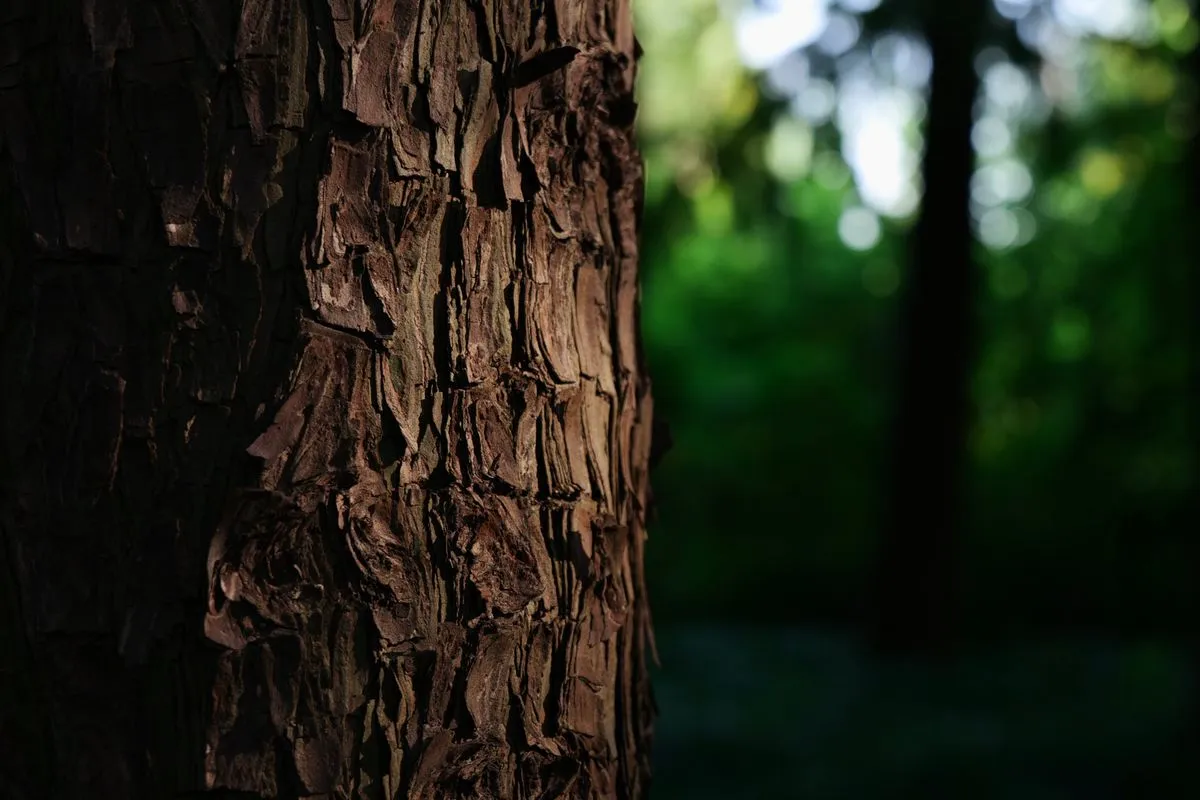
FlowForce Max leads with Graminex flower pollen extract, the botanical with the strongest randomized-trial record in this category, and builds saw palmetto and nettle root around it, in a once-daily chewable.
Read the full FlowForce Max review →
If you buy through this link I receive a commission at no additional cost to you.
Does pygeum help with waking up at night to pee?
Less than the headline suggests. Supplement pages love the line that pygeum cut nighttime urination by 19%. The figure is real, and it hides the part that matters.
In the three trials that reported it, men started at about three trips a night. Pygeum lowered that by 0.9 trips compared with placebo, and the confidence interval ran from about two fewer trips to a fraction more. In plain terms, the result was not statistically significant.
Saw palmetto did no better. In the 72-week CAMUS trial, 369 men on up to triple the usual dose did not wake up significantly less than men on placebo, according to the 2012 Cochrane update.
That matters because nighttime trips often are not a prostate problem at all. The kidneys making too much urine at night is the more common cause, which is why nocturia and overactive bladder are worth telling apart before you buy anything. The full picture is in the main guide to waking up at night to urinate after 50.
How much pygeum should you take?
The trials used 75 to 200 mg a day of a standardized bark extract, most often 100 mg. Most of that research used one French extract, sold in Europe as Tadenan. A capsule labeled only "pygeum bark powder" is not the same thing.
Once a day appears to work as well as twice. A randomized trial of 209 men compared 100 mg once daily with 50 mg twice daily for two months and found the same improvement in both groups: symptom scores fell by 35% to 38%.
The same men were then followed for a year on 100 mg a day, without a placebo group. Symptom scores fell from 16 to 9, and half the men ended below 8, the line for mild symptoms. Treat that year as a hint about duration, not proof.
For saw palmetto, the standard dose is 320 mg of extract a day, and CAMUS showed that tripling it adds nothing. Whichever you choose, give it the length of a real trial, about two to three months, before you judge it.
Can you take pygeum and saw palmetto together?
Many products already combine them, and the trials of those blends are small and mixed.
The most encouraging is a three-month Australian trial of a five-ingredient capsule that included both, plus pumpkin seed, willowherb and lycopene. In 57 men, nighttime trips fell from 2.9 to 1.8 on the blend, against 2.8 to 2.6 on placebo. With five ingredients in one capsule, nobody can say which one did the work.
The least encouraging paired 25 mg of pygeum with 300 mg of nettle root for six months in a Brazilian trial of 49 men. Symptom scores fell 21.6% on the blend and 19.7% on placebo, no real difference. The pygeum dose was a quarter of what most trials used, which may explain it.
Cochrane's verdict on saw palmetto blends in general is low certainty: possibly a small benefit, possibly none. Taking both is unlikely to hurt, since side effects in both bodies of research were mild and close to placebo, mostly stomach upset and nausea.
Tell your pharmacist anyway, especially if you take a blood thinner or a prescription prostate drug such as tamsulosin or finasteride. Neither herb has been properly tested alongside them. The symptoms that should not wait for a supplement to work are listed in when to see a urologist.
Why is pygeum harder to find than saw palmetto?
Because of the tree. The pygeum in the trials came from bark, and for decades that bark was stripped from wild trees. Heavy harvesting weakens and kills them, and the African cherry has been listed in CITES Appendix II since 1995, the treaty category for species whose trade must be controlled.
A European Union import ban from 2007 was lifted in 2011, according to a 2016 review of the bark trade. By 2012, Cameroon supplied nearly three-quarters of the world's pygeum bark.
None of that changes whether pygeum works. It changes what you are buying. Look for a label that states how much standardized extract each capsule holds. Saw palmetto has no such problem: the berries are picked and the palm keeps growing.
So which one should you try first?
On evidence alone, pygeum has the better results and saw palmetto has the better-tested disappointment. Four rules hold whichever you pick.
- Read the back label. Look for "standardized extract" and the milligrams. About 100 mg of pygeum extract a day is what the trials used; plain bark powder is not.
- Give it a trial-length run. Pygeum trials averaged about two months. Judging a bottle after two weeks tells you nothing.
- Expect easier flow, not a smaller prostate. No trial showed either herb shrinking the gland.
- Count before and after. Write down your night trips for three nights before you start and three nights at week eight. Placebo responses in prostate trials are large, and memory is not a measuring device.
None of this replaces a diagnosis. A supplement cannot tell you whether a weak stream after 50 comes from the prostate, and the early signs most men explain away are worth reading before you spend anything.
If I could change one thing about those four months my father-in-law spent on saw palmetto, it would not be the bottle. It would be that nobody wrote anything down, so nobody could tell whether it was working.
If you want one bottle instead of two
FlowForce Max is the formula I researched most closely for my own family: Graminex flower pollen extract, saw palmetto, nettle root, grape seed, muira puama and zinc in a single daily chewable. Free US shipping, no subscription, and 60 days to change your mind, opened bottles included. $69 for one bottle, $59 each for three, $49 each for six.
See the official FlowForce Max page →
Affiliate link. I earn a commission at no extra cost to you. It does not contain pygeum. A supplement is not a treatment for an enlarged prostate and is never a substitute for being examined.
Frequently asked questions
Which is better for the prostate, pygeum or saw palmetto?
Pygeum, on the trial results. Pooled pygeum trials found men were twice as likely to report improvement, with peak flow up about 2.5 mL per second. Saw palmetto matched placebo across 27 trials and 4,656 men. The caveat: pygeum's trials averaged 64 days, and saw palmetto looked just as good before its long trials.
Can I take pygeum and saw palmetto together?
Many products combine them. A three-month trial of a five-ingredient blend containing both cut nighttime trips from 2.9 to 1.8, but no trial has tested the pair on its own. Side effects of both are mild. Check with a pharmacist if you take a blood thinner or a prescription prostate drug.
Does pygeum help with nighttime urination?
Only slightly, if at all. Across three trials, pygeum reduced nighttime trips by 0.9 a night compared with placebo, the 19% drop often quoted, and the result was not statistically significant. Nighttime urination is often driven by the kidneys rather than the prostate, so find the cause first.
How long does pygeum take to work?
The trials lasted 30 to 122 days, about two months on average, and that is when improvements were measured. In one trial of 209 men, symptom scores improved by about a third at two months and kept improving over an open-label year on 100 mg a day.
What are the side effects of pygeum?
In the trials, side effects were mild and close to placebo, mainly nausea and stomach upset. Dropout rates were 13% on pygeum and 11% on placebo. Safety beyond about a year has not been studied, so tell your doctor you are taking it.
References
The studies and health-agency pages cited on this page, in the order they first appear.
- Wilt TJ, Ishani A, Stark G, MacDonald R, Lau J, Mulrow C. Saw palmetto extracts for treatment of benign prostatic hyperplasia: a systematic review. JAMA. 1998;280(18):1604-9. PMID 9820264.
- Ishani A, MacDonald R, Nelson D, Rutks I, Wilt TJ. Pygeum africanum for the treatment of patients with benign prostatic hyperplasia: a systematic review and quantitative meta-analysis. Am J Med. 2000;109(8):654-64. PMID 11099686.
- Wilt T, Ishani A, Mac Donald R, Rutks I, Stark G. Pygeum africanum for benign prostatic hyperplasia. Cochrane Database Syst Rev. 2002;(1):CD001044. PMID 11869585.
- Bent S, Kane C, Shinohara K, et al. Saw palmetto for benign prostatic hyperplasia. N Engl J Med. 2006;354(6):557-66. PMID 16467543.
- Franco JV, Trivisonno L, Sgarbossa NJ, et al. Serenoa repens for the treatment of lower urinary tract symptoms due to benign prostatic enlargement. Cochrane Database Syst Rev. 2023;6(6):CD001423. PMID 37345871.
- Lee J, Andriole G, Avins A, et al. Redesigning a large-scale clinical trial in response to negative external trial results: the CAMUS study of phytotherapy for benign prostatic hyperplasia. Clin Trials. 2009;6(6):628-36. PMID 20007408.
- Barry MJ, Meleth S, Lee JY, et al. Effect of increasing doses of saw palmetto extract on lower urinary tract symptoms: a randomized trial. JAMA. 2011;306(12):1344-51. PMID 21954478.
- Memorial Sloan Kettering Cancer Center. Pygeum. About Herbs.
- Tacklind J, Macdonald R, Rutks I, Stanke JU, Wilt TJ. Serenoa repens for benign prostatic hyperplasia. Cochrane Database Syst Rev. 2012;12(12):CD001423. PMID 23235581.
- Chatelain C, Autet W, Brackman F. Comparison of once and twice daily dosage forms of Pygeum africanum extract in patients with benign prostatic hyperplasia: a randomized, double-blind study, with long-term open label extension. Urology. 1999;54(3):473-8. PMID 10475357.
- Coulson S, Rao A, Beck SL, Steels E, Gramotnev H, Vitetta L. A phase II randomised double-blind placebo-controlled clinical trial investigating the efficacy and safety of ProstateEZE Max: a herbal medicine preparation for the management of symptoms of benign prostatic hypertrophy. Complement Ther Med. 2013;21(3):172-9. PMID 23642948.
- Melo EA, Bertero EB, Rios LA, Mattos D Jr. Evaluating the efficiency of a combination of Pygeum africanum and stinging nettle (Urtica dioica) extracts in treating benign prostatic hyperplasia (BPH): double-blind, randomized, placebo controlled trial. Int Braz J Urol. 2002;28(5):418-25. PMID 15748367.
- Stewart KM. The African cherry (Prunus africana): can lessons be learned from an over-exploited medicinal tree?. J Ethnopharmacol. 2003;89(1):3-13. PMID 14522426.
- Cunningham A, Anoncho VF, Sunderland T. Power, policy and the Prunus africana bark trade, 1972-2015. J Ethnopharmacol. 2016;178:323-33. PMID 26631758.

Why I write about this
Carla S.
I'm not a doctor and I won't pretend to be. I write about prostate health because I helped care for my father-in-law through years of it, sat in on the appointments, and read everything I could find while we worked out what was actually happening.
Comparisons like this one are the pages I wish had existed when we were standing in a pharmacy aisle guessing. More about why I started this site.
Medical disclaimer: I am not a physician, nurse, or licensed health professional. Nothing here is medical advice or a diagnosis. Supplements are not treatments for an enlarged prostate. Always consult a doctor or urologist about your own symptoms and before starting anything new.